


This is Yun Hai Taiwan Stories, a newsletter about Taiwanese food and culture by Lisa Cheng Smith 鄭衍莉, founder of Yun Hai. If you aren’t yet a subscriber, sign up here.
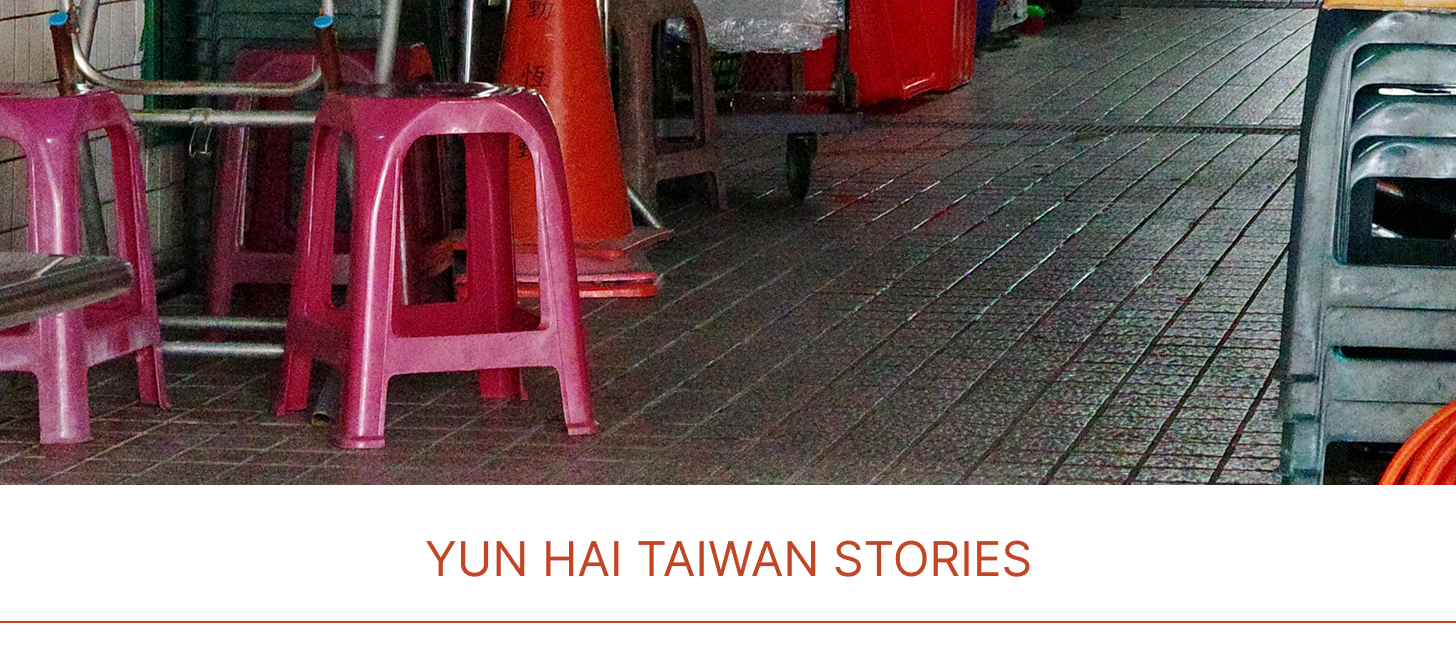
This week, we launch… furniture! Really! We’ve imported a small amount of our favorite plastic stools, verifiably made in Taiwan.
As you’ll read below, outdoor seating is an engine of Taiwanese street life; almost nothing feels more familiar. Plastic stools are seen all over Asia (and all over the world), enabling collapsible democratic seating everywhere. But every country has a different selection, and we’ve imported our favorite versions directly from Taiwan.
We’re offering two kinds: the ubiquitous, date-colored red stool (pictured above and below), and an even older format, a three part stool with a design dating back to the 60s. Both Made in Taiwan.
And while we’re on the topic, I wanted to share 來坐 Grab a Seat, a Taiwanese outdoor party put together by our friend Janet Liu. It’s happening this weekend in New York City, centered around the idea of sharing stories around a table and featuring programming like a Lantern Painting Workshop and an exploration of Pantoh (Taiwanese roadside banquet).
I’m telling you now, but you may already know: I have a longstanding love affair with stools and chairs that I just can’t walk away from. I’m not referring to the design feats accomplished with stacked cardboard (Gehry) or stuffed animals (Campana Brothers) intended as high end gallery pieces. It’s the old, world-weary seats that call my name. Those that have served many times over, holding our collective human weight in position on their slender legs and their petite feet, somehow never getting in the way of ours.
Think of them as micro-architecture. A portable structure with one function—to support. Have you ever brought a folding chair to the beach? Or a lawn chair to the campsite? Or parked yourself outside a sidewalk cafe that had just enough room for a little perch? And enjoyed the heck out of it? Humans need to sit down, and when we do, something magical happens. Space transforms. We stop moving through it and it becomes our setting, our stage.
Chairs and stools hybridize the shape of the body with the shape of the world. The seat and back reflect the human form, but the supports take on the language of columns and beams, transferring our forces to the ground. They are talismanic connectors in that way. What did I tell you, I’m chair crazy.
Here’s a drawing I came across many years ago by the architect Le Corbusier (pioneering Swiss-French modernist architect active in the first half of the 20th century, if you didn’t know). I actually can’t find the original attribution and don’t know where I first saw it (an out-of-print Atelier Bow-Wow essay?), but found it again, employing many differently phrased queries over the course of three hours, cited in this paper by Tahi Kaminer.
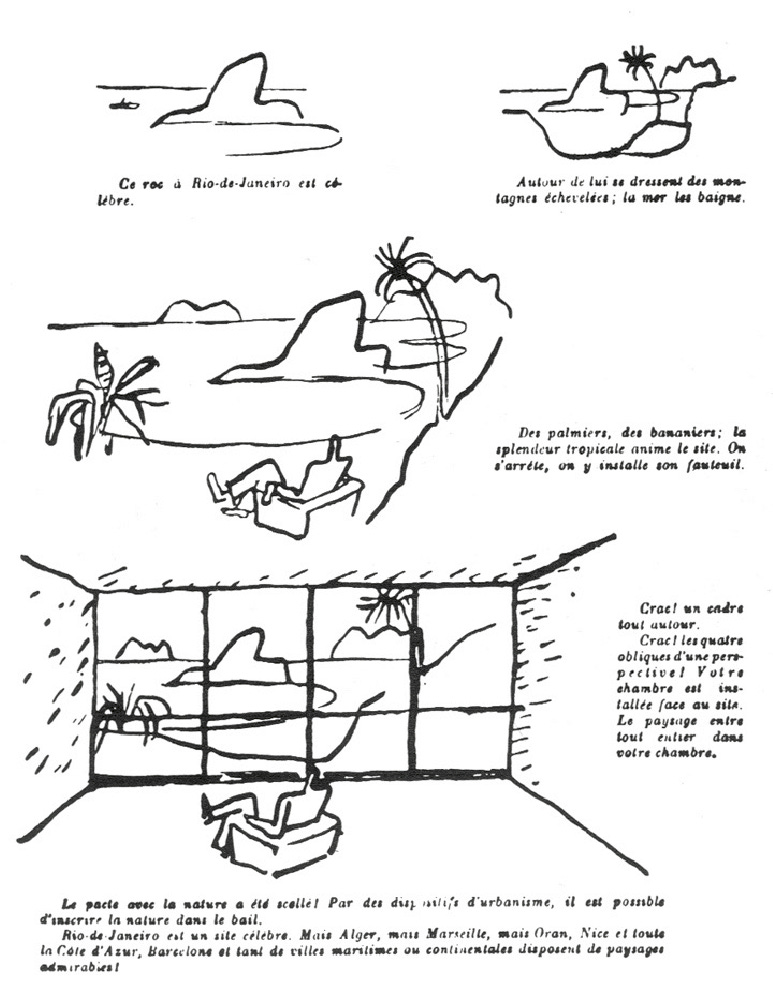
In the drawing, we first see Sugarloaf Mountain and the mouth of Guanabara Bay in Rio de Janeiro. To translate the caption: This rock of Rio de Janeiro is famous. Then, we pull out to see the rest of the landscape. Around it rise disheveled mountains; the sea bathes them. And then, a figure in a chair. Palm trees, banana trees: tropical splendor animates the site. One stops, one installs one's armchair there. And then a building is imposed around the figure; a room emerges. Crack! A frame. Crack! The four obliques of a perspective! Your room is installed facing the site. The landscape enters whole into your room.
It’s meant to convey, among other things, how architecture can orient people to the landscape and (in my opinion) how it asserts control over our relationship with site. But the first reading for me has always been about the seat as a first architectural gesture, reflecting an intention to be there. Its presence suggests a desire or need to occupy. When the seat is full, it orients the human figure to the context it’s in. When empty, it reflects a human presence and the imprint of the absent occupant.
I recall this drawing often when passing through the streets of Taiwan, where the seat is so often the engine of urban use. See below, a small collection of documents from my many unorganized photos of seating in the wild:
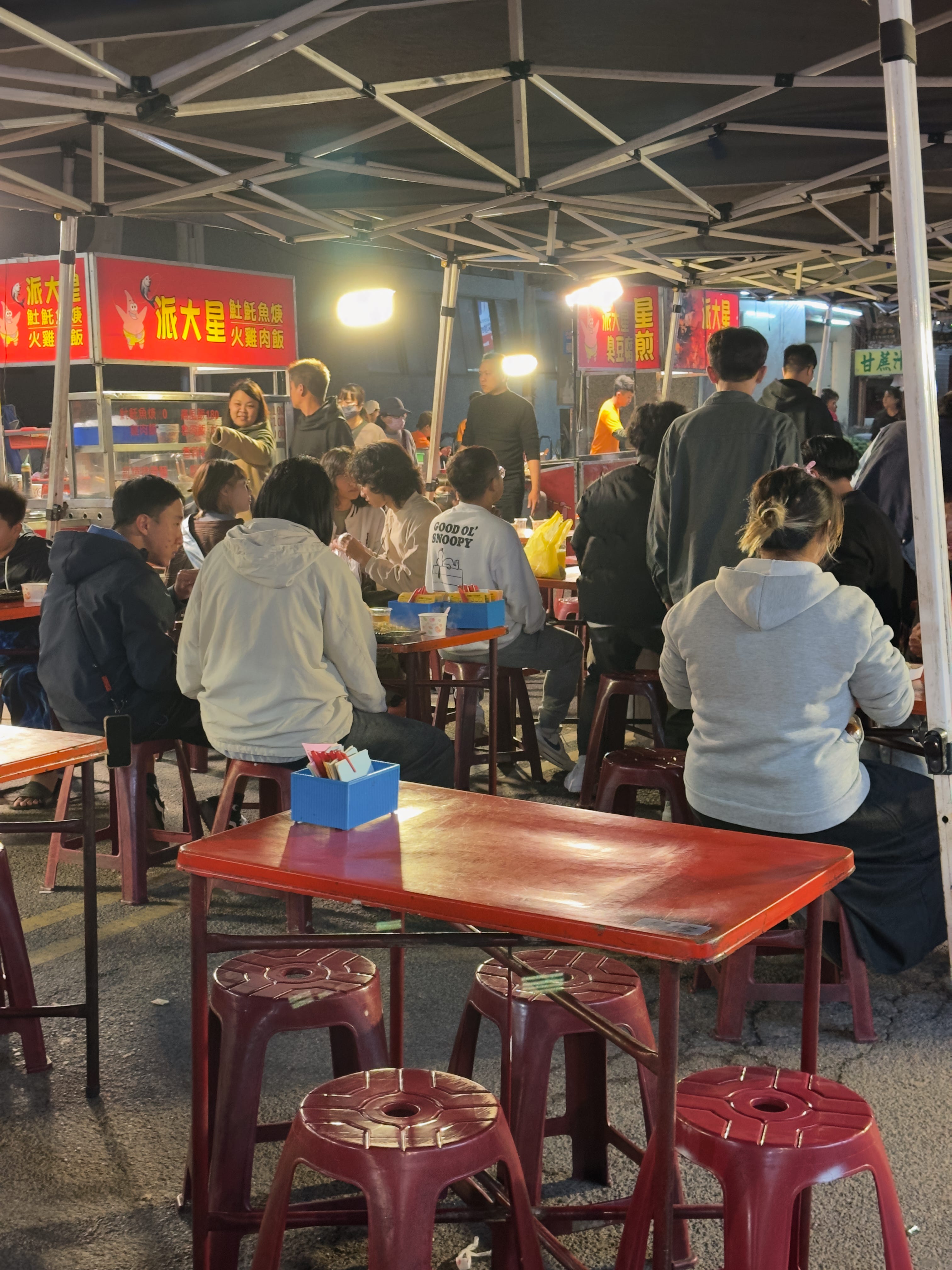
A series of plastic stools scattered throughout a street in Taiwan creates the dining setting for a night market. You can see the yellow dividing line under the stool of the far leftmost person.
It’s common to see the plastic stools supporting production, too, as a surface for work. Here, in Taipei:
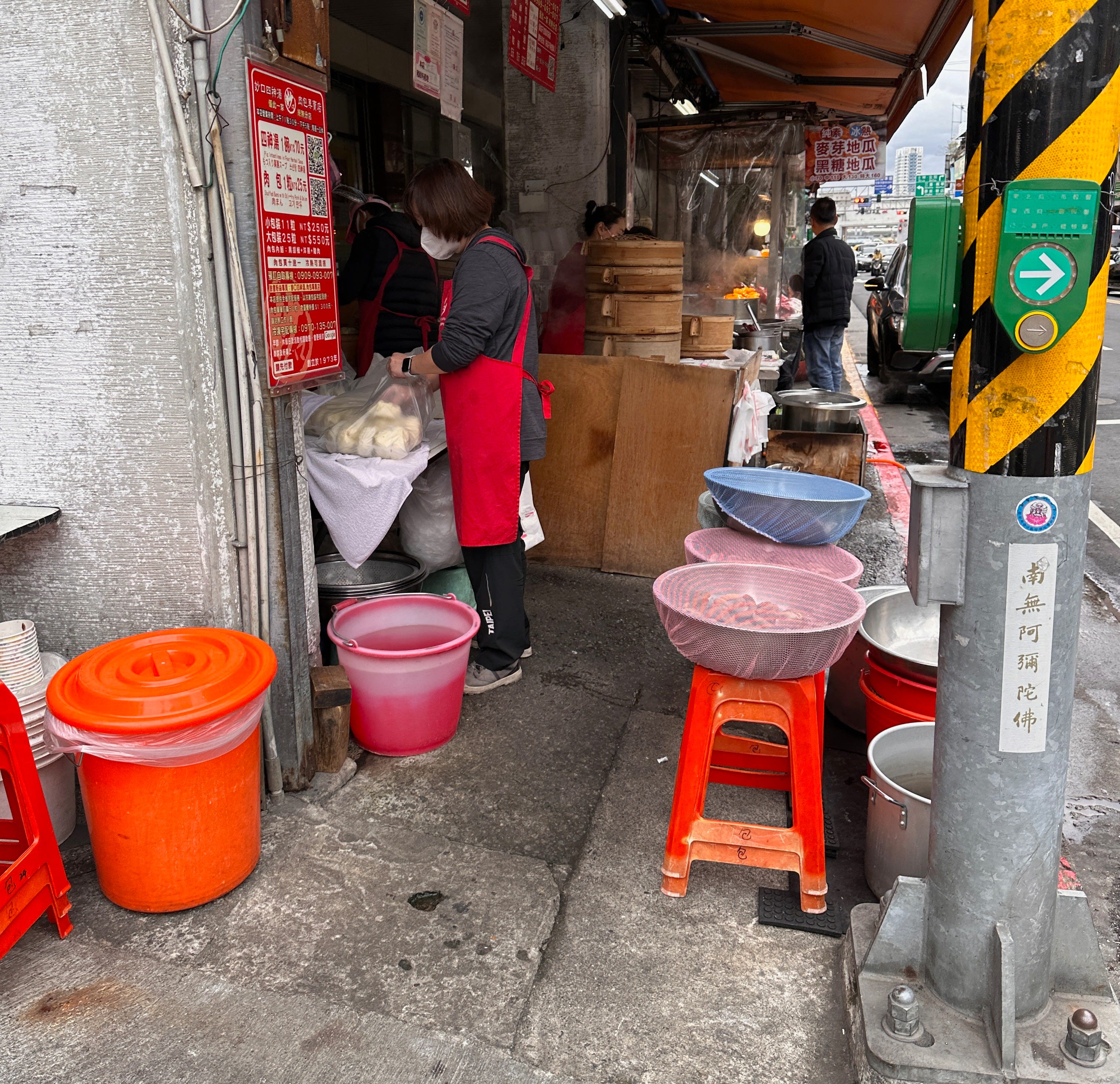
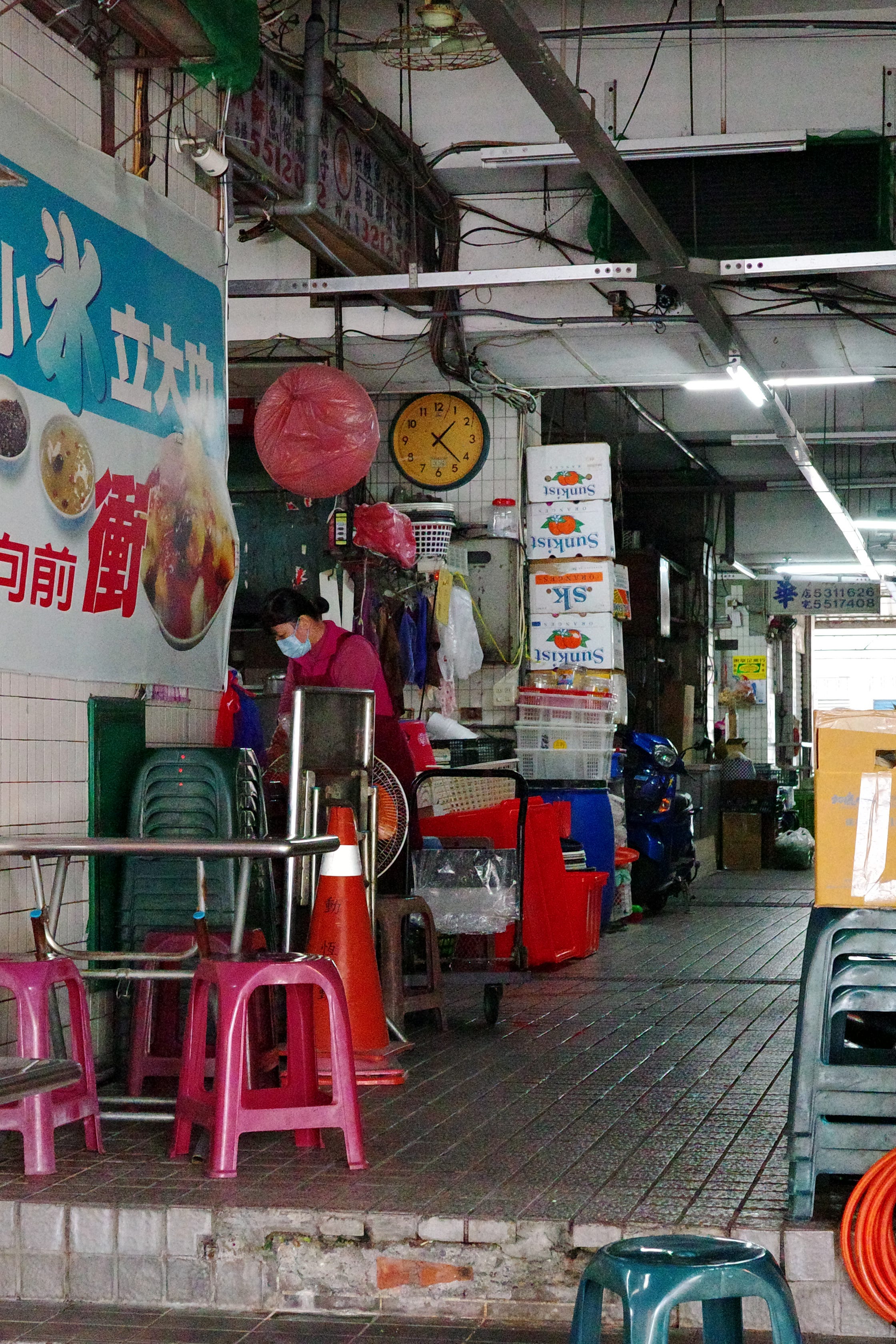
These stools are also clues to sidewalk use, which changes with every hour of the day in Taiwan. Here, in Kaohsiung, we see some red stools out with a stainless steel table on a quiet morning. But we also see stacks of green ones and a couple of traffic cones, which indicate the area gets much busier at another time of day, likely spilling into the street. It’s a happening spot.
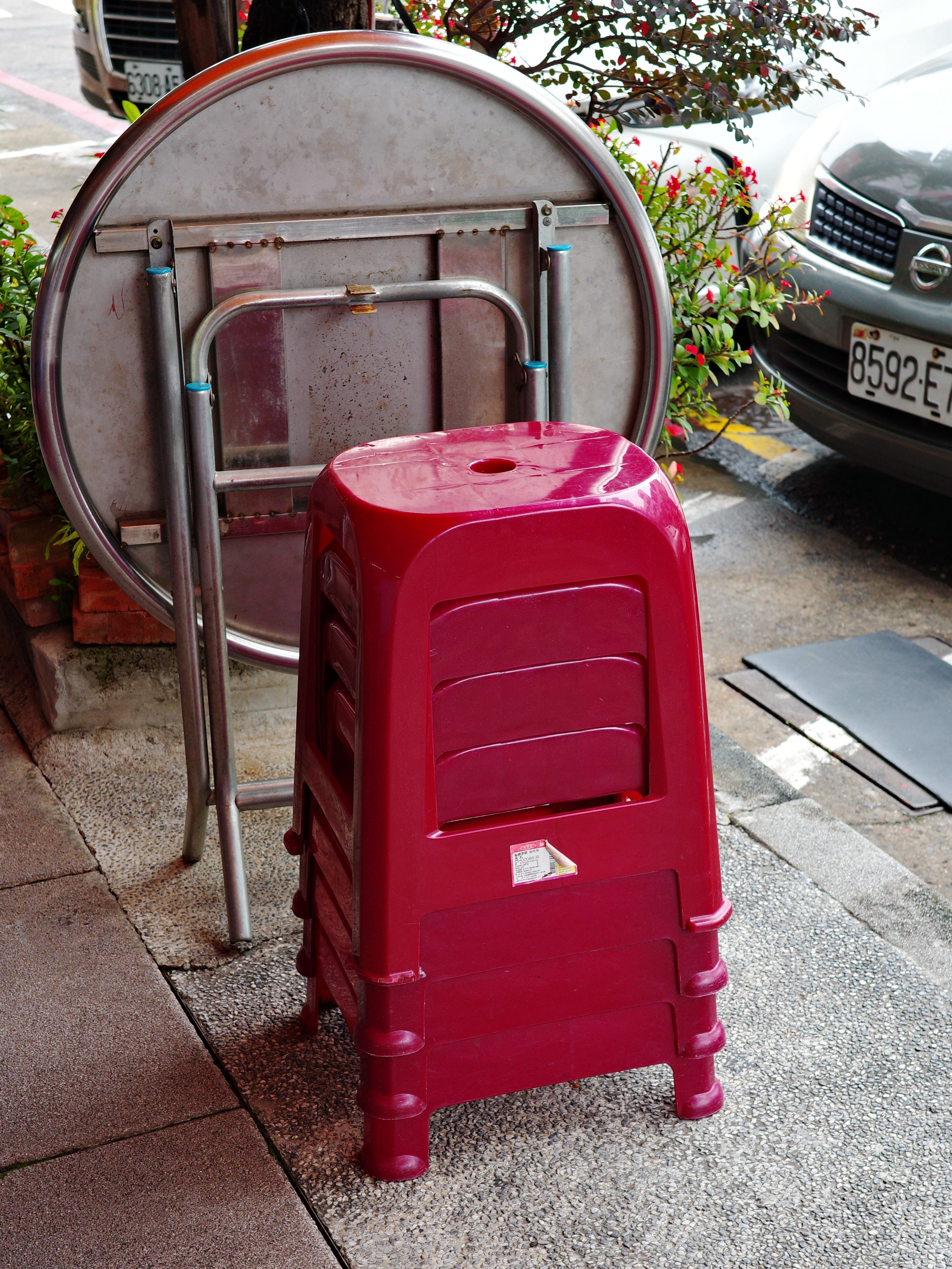
Stools stacked neatly on the sidewalk might also indicate the presence of an invisible eatery, because the cart is closed up or the sign is obscured. These say: we’re not here now, but come back later and we’re prepared to accommodate you.
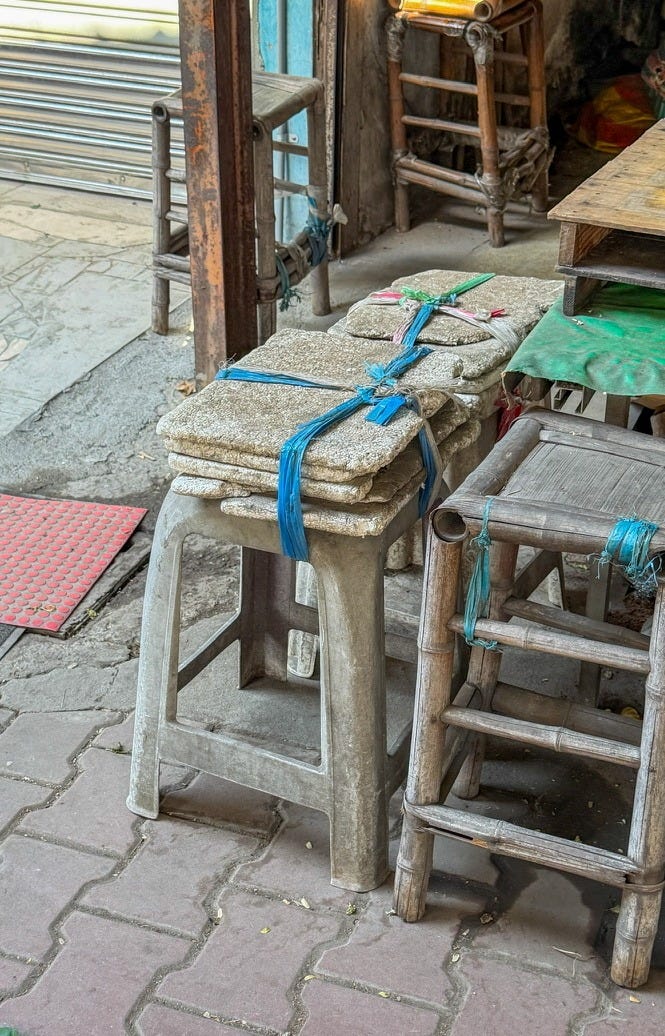
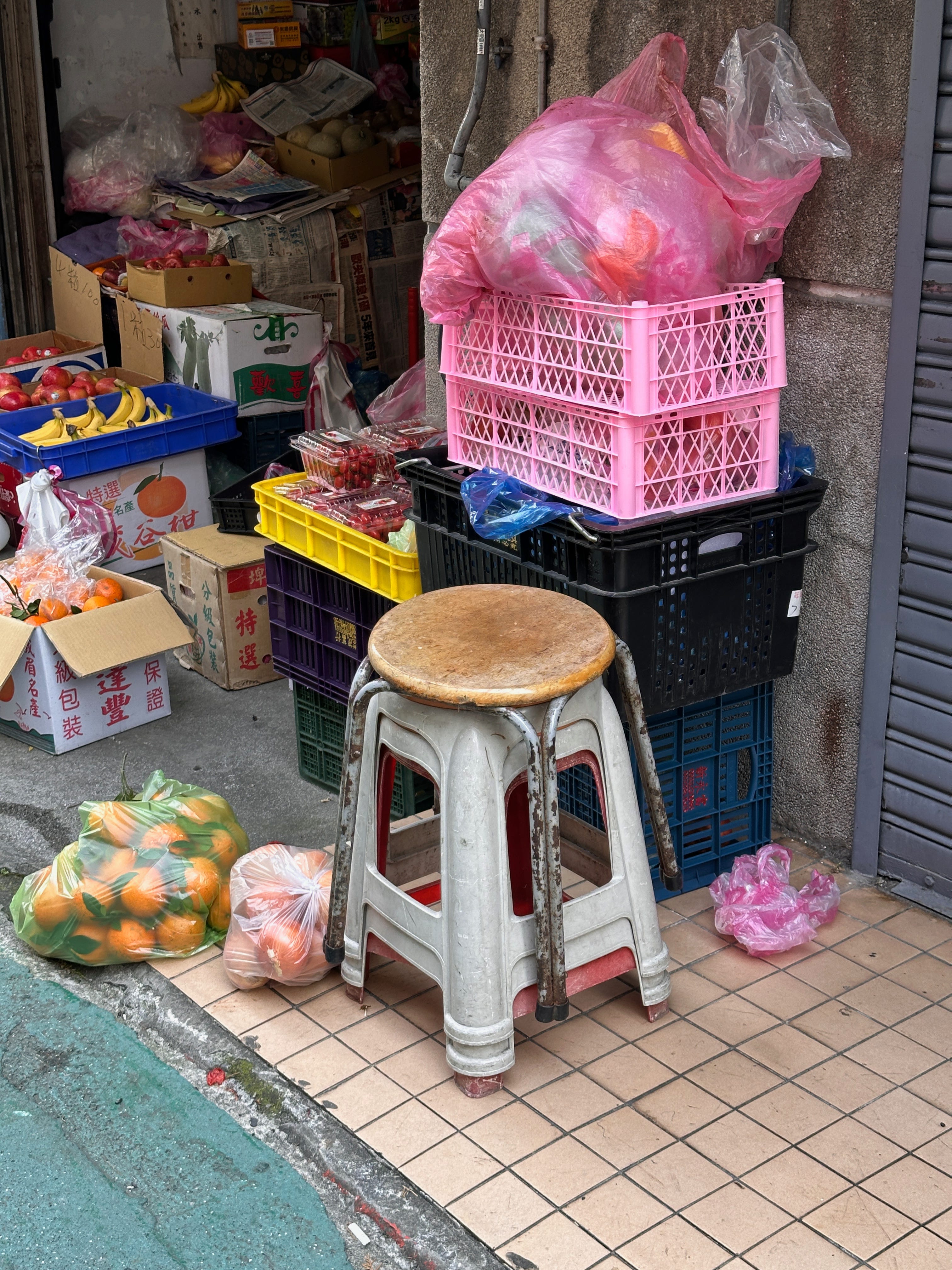
Taiwanese street culture, like me, adores its stools and takes care of them in ways that we could really learn from. Here we’ve got old ones still in use. Stacked dutifully and with care; cherished despite their age and inexpensive material. Blessed by their utility and taking on the character of battered seashells passed from creature to creature. (Humor me, I recently took care of some hermit crabs and am now viewing the world through their tiny eyes and bottom-feeding habits).
I wrote about this (and other related architectural texts and the history of monobloc plastics) in Little Red Stool, sent when we launched our little ceramic replica stools a year and a half ago. Head there to read more about the phenomenology of seating in the Taiwan streetscape, with examples:
Big Red Stools
As part of our Taiwanese everyday object collection (mailbox, ga ji dai tote, hinoki chopsticks, etc), we thought it would be lovely to bring in one of the most ubiquitous structures of all: the stackable stool. Today, we’re launching full size, stackable plastic stools, all made in Taiwan. We don’t have all that many stocked, as furniture is a new experiment for us. If we sell out (is it possible?), we’ll be restocking more a few months from now.
We have two types: the maroon stool pictured in many of the tableaus above, which are quite a bit sturdier than the standard issue we’ve found around NYC. The plastic is a bit thicker, the feet have rubber stoppers, and the seat is reinforced. They stack like a dream. We use them at home to support plants, accommodate extra dinner guests, and pull up to craft hour or music lessons.
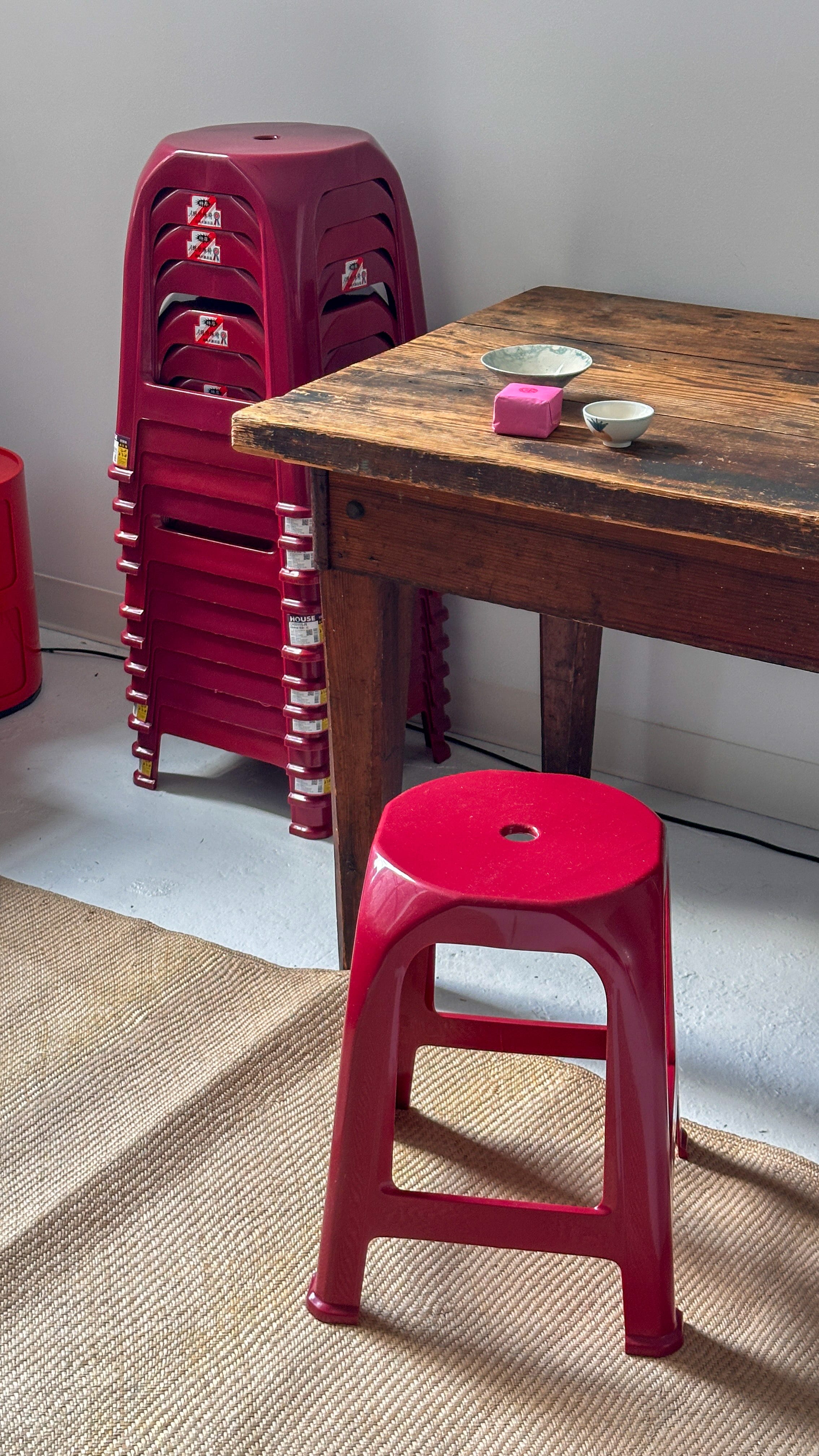
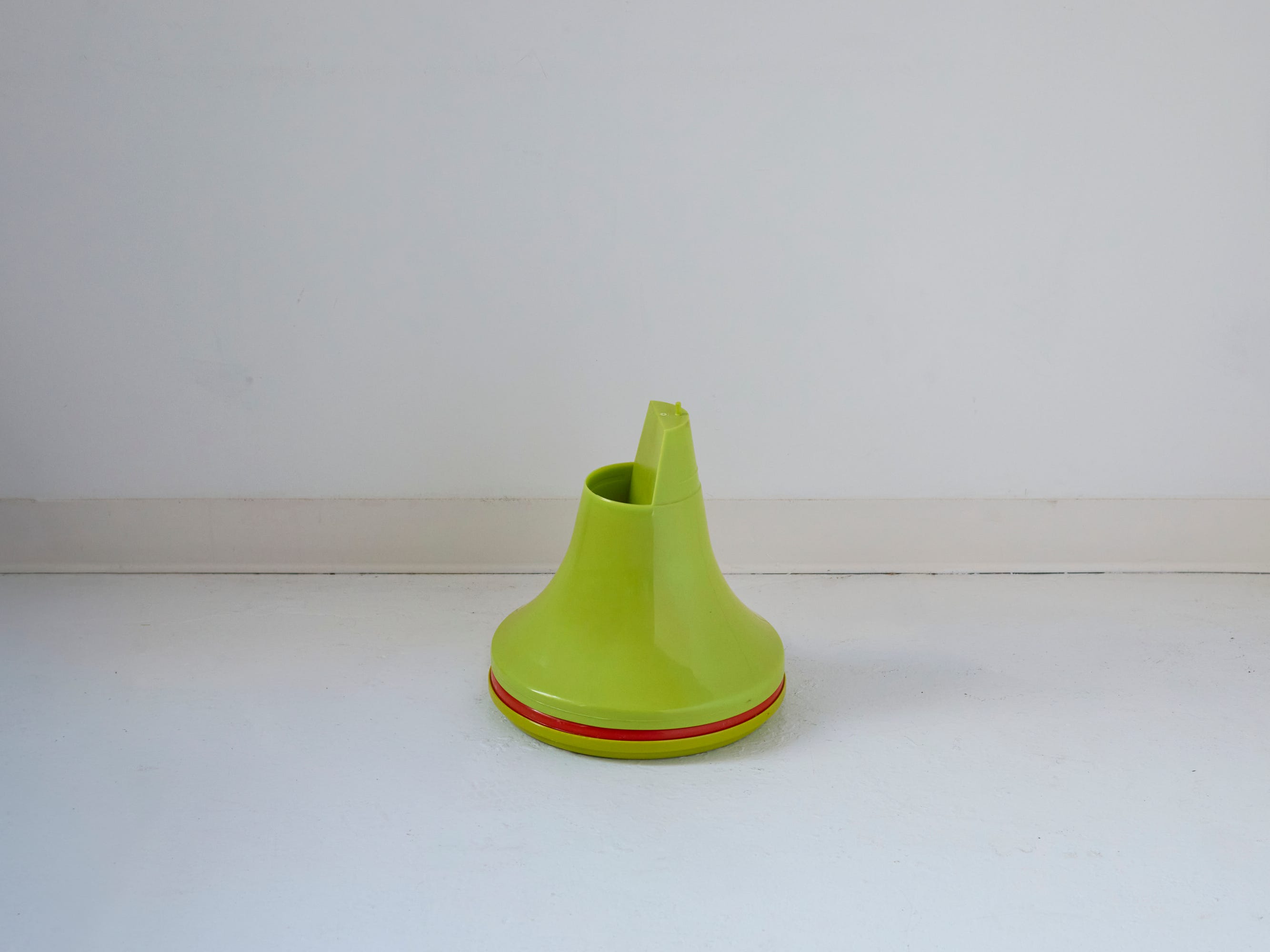
We’re also launching a lesser-known and even more vintage plastic stool, a three-part number that breaks apart into a small stack. We call them Chess Stools, because of their pawn-like look. They’re actually an interpretation of a mid-century French design that dates to the 60s, originally designed as an inexpensive seat for fishermen, with a compartment in the top that can be used for storage. Brigitte Bardot was pictured with one, and the stool skyrocketed in popularity. The design of the Taiwanese-produced stool is slightly different, but is clearly influenced by the construction and corseted shape.
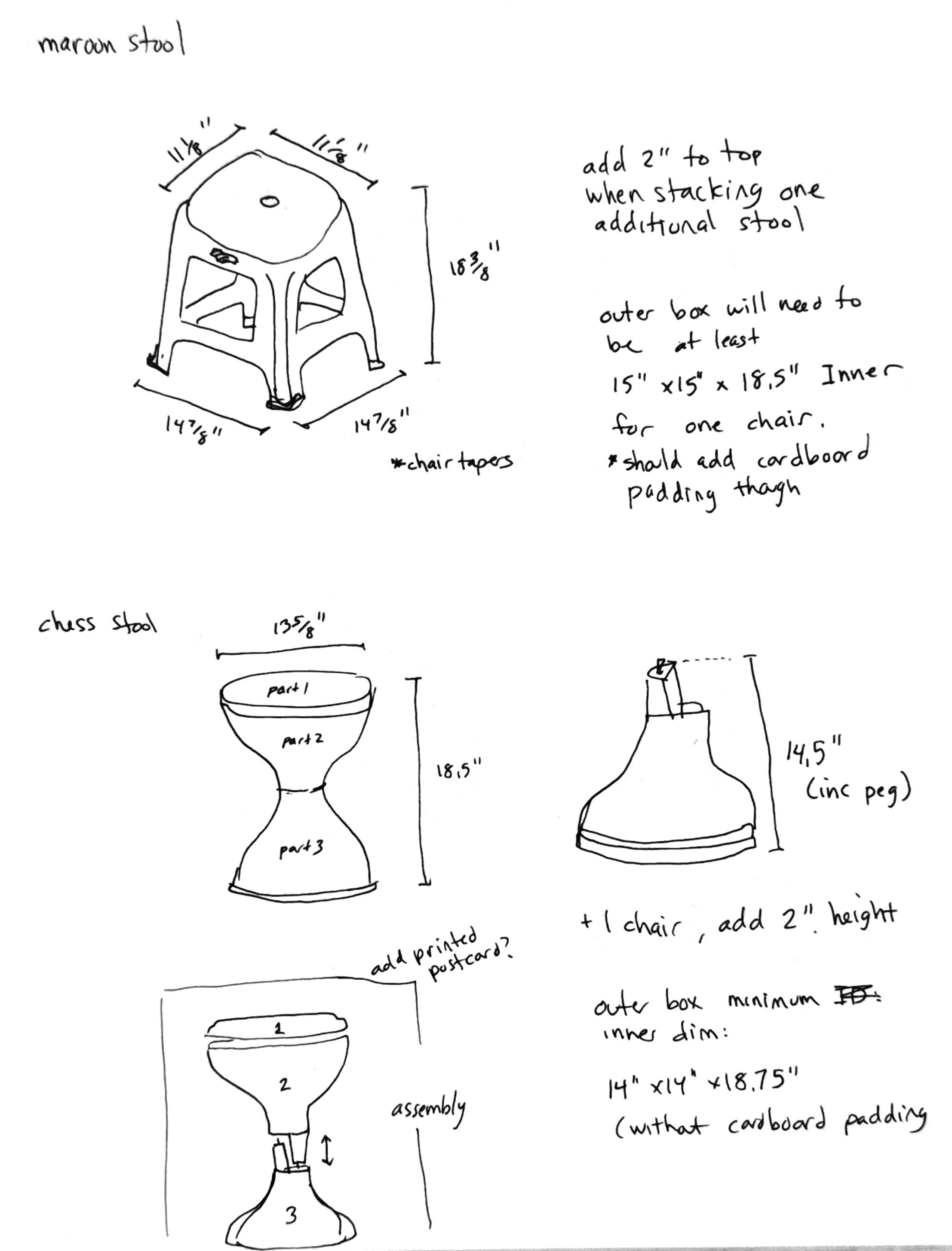
The prices on these are definitely higher than you’d see in Taiwan. Full transparency: we’ve kept them as low as possible while also considering the shipping and storage costs. You can see our drawings for logistics calculations below. Most of the cost is in the shipping, so buy in multiples to save up to 48%!
紅色塑膠椅 Taiwanese Red Stool
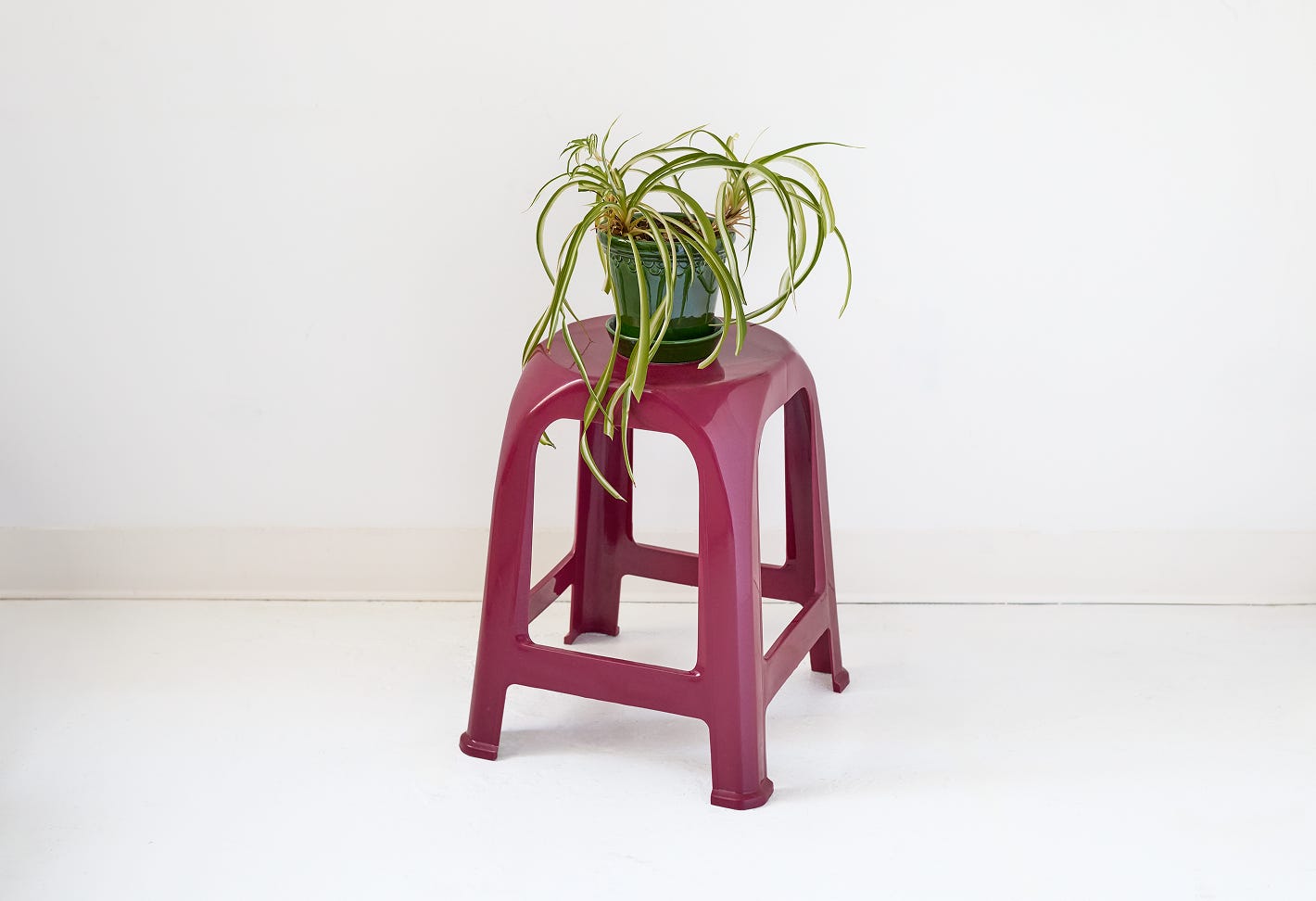
We’ve long had a diorama-sized version of the red stool in our collection, but now, we’re bringing you the real thing.
Deep red with sleek, faceted curves, this plastic stool can be used indoors or outdoors. Set a bunch of stools out in the backyard to host a Mid-Autumn BBQ, Taiwan-style, then stack ‘em up in the garage to easily store them away. Bring a stool indoors for extra seating or decor—a nod to Taiwanese street life (even better if paired with a Taiwanese mailbox).
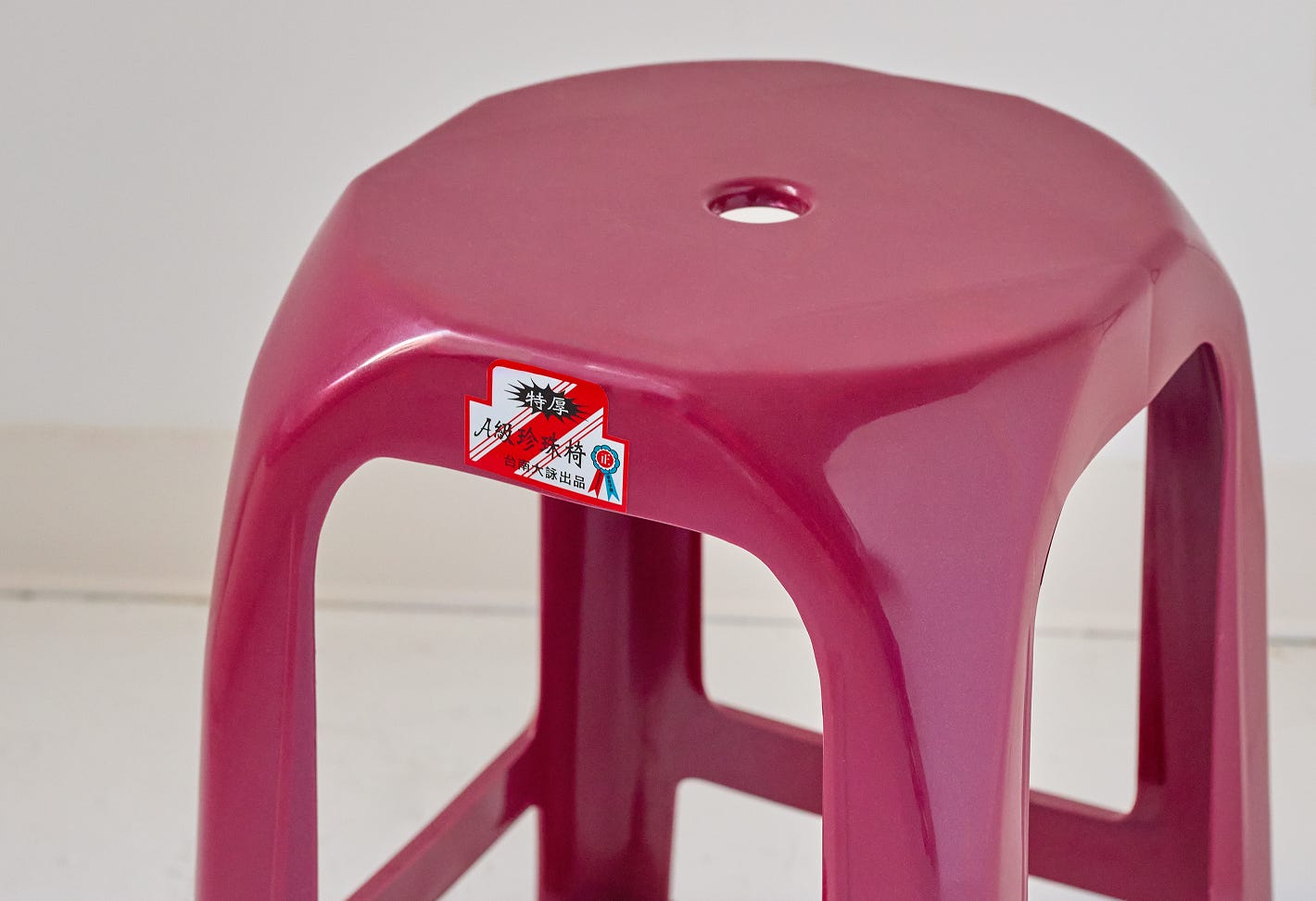
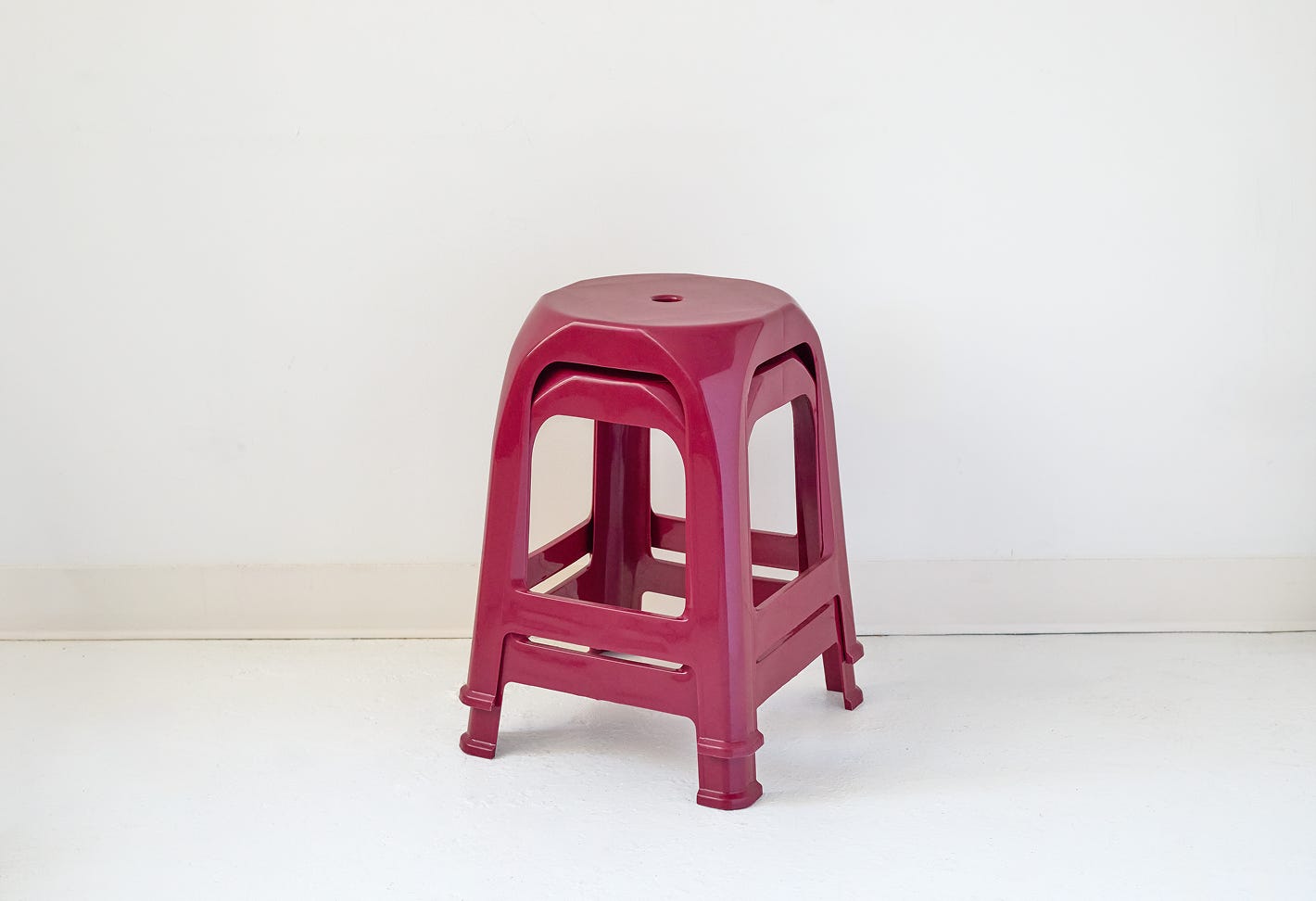
喇叭椅 Chess Stools
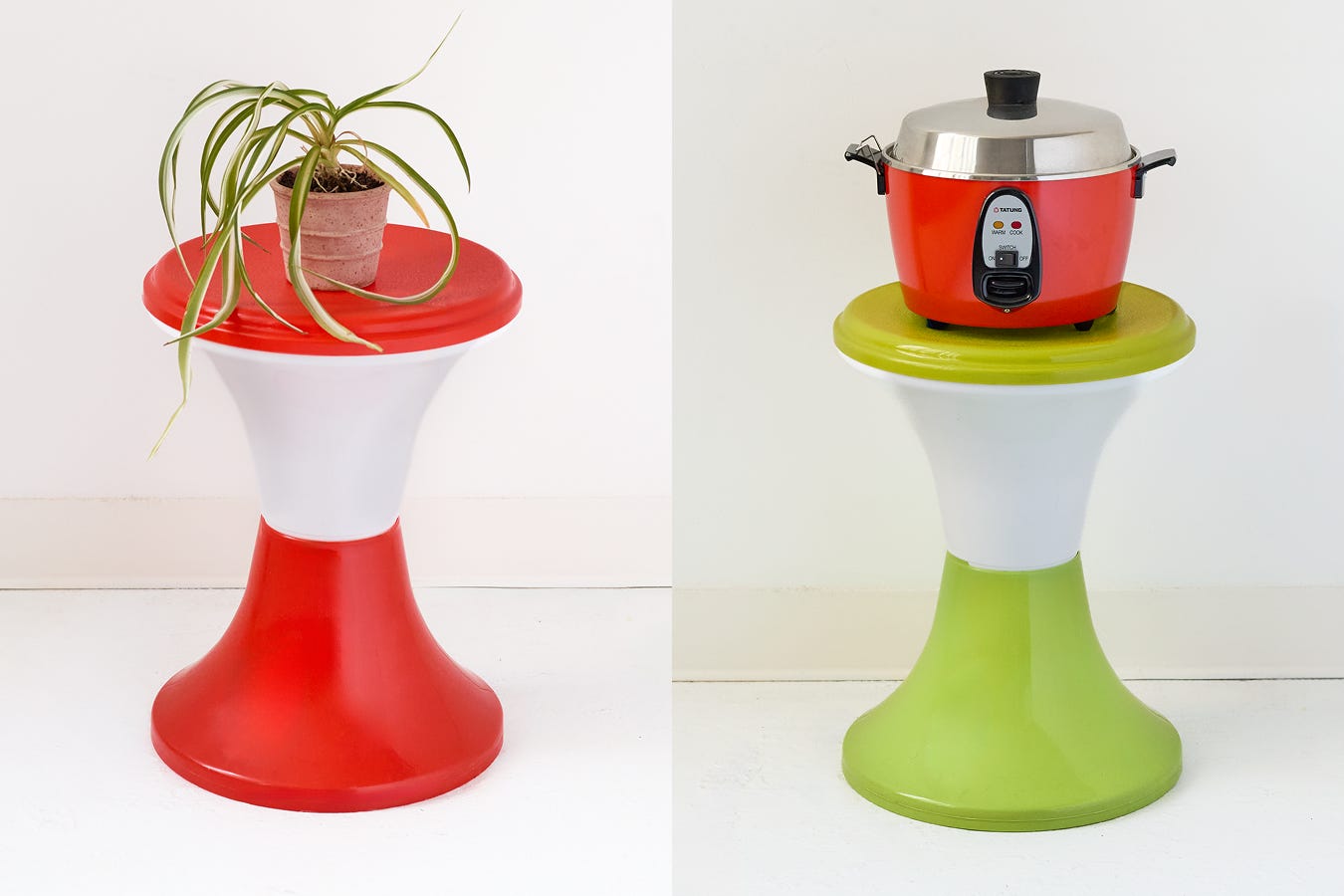
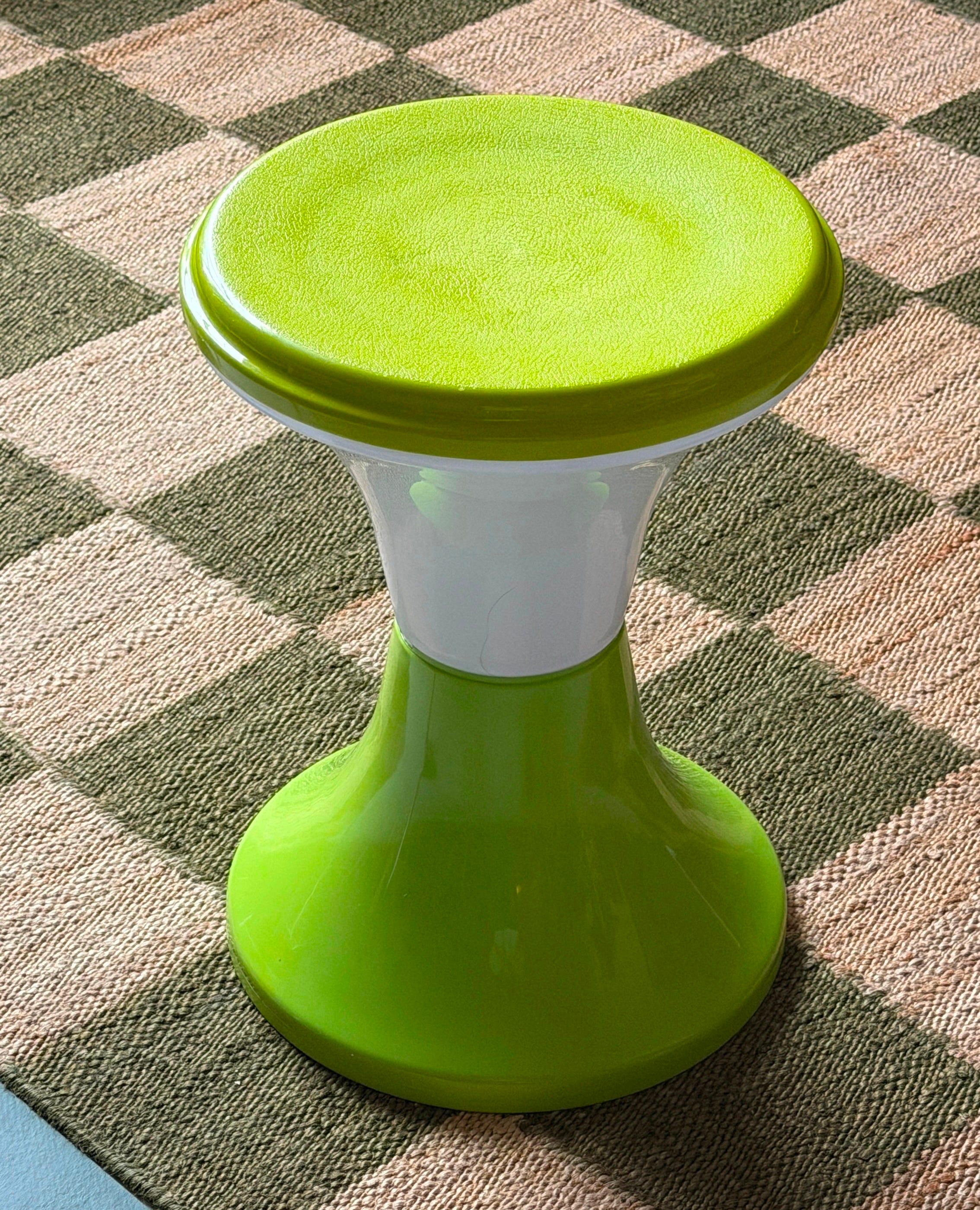
Teleported straight from that bygone era, this palindromic vermillion-red/chartreuse-green number is sleek and low-profile, evocative of 1970s pop design. In addition to sitting, you can also use the top compartment for storage.
When you want to put them away, simply break them down and stack the parts for storage, as seen below:
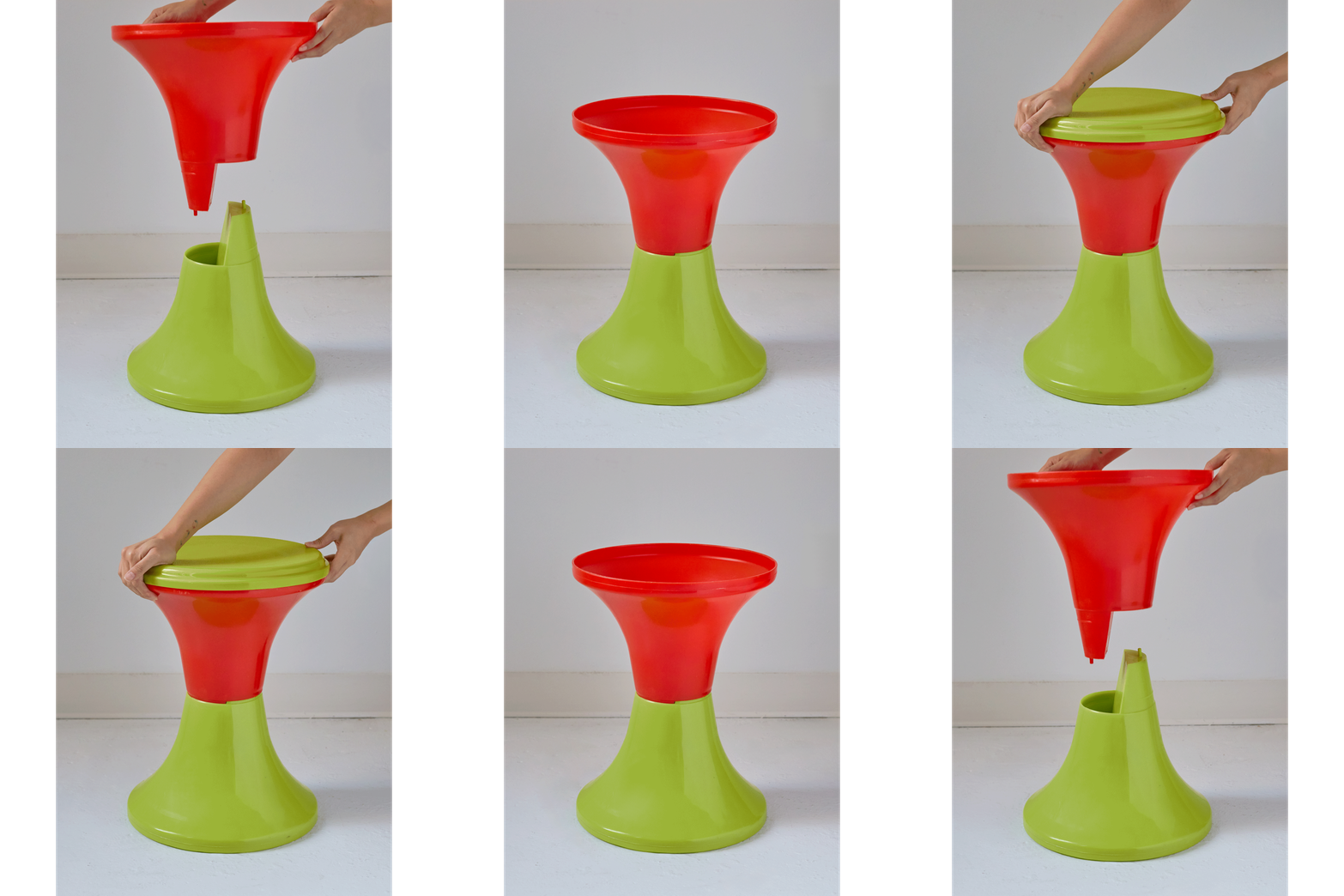
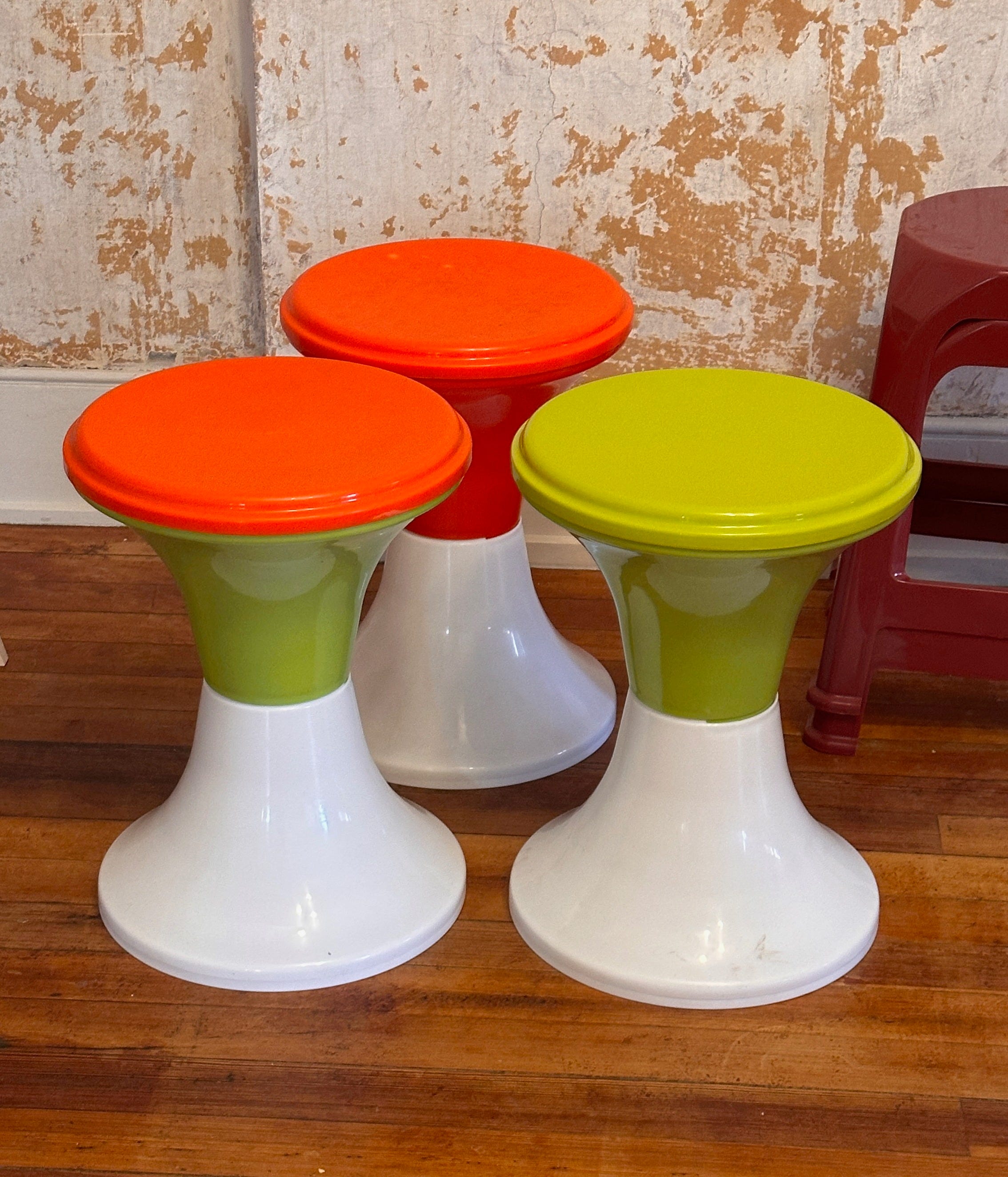
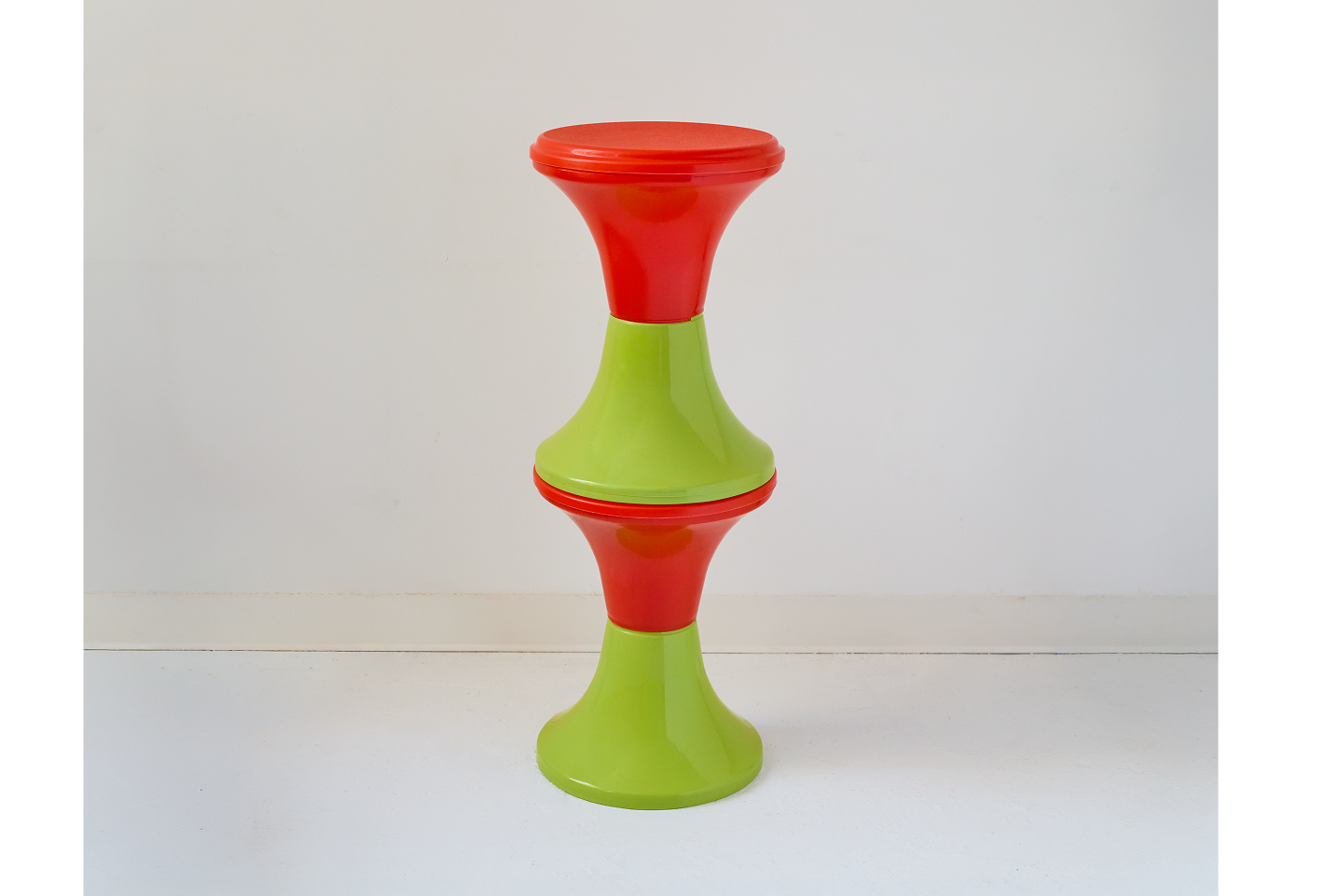
And if you get multiple stools, you can customize their color combinations: red on red, green on green, and red on green (which, of course, we’re partial to for its resemblance to our Yun Hai Tatung Family Cookbook).
They also stack beautifully if you’re in the market for a red and green totem for some reason (who isn’t).
Before I Go…
Just a note to consider revisiting this excellent and on-theme song Sitting is the Opposite of Standing, at one point a go-to sing along in my household. It’s a couple years old now, but I think we need to hear it again. We deserve to sit. It’s the opposite of running around.
On Friday, April 25th, join me at Enoki Catskill, an Asian market in Saugerties, NY from 12-2pm for a soy sauce talk and tasting. I’ll be sharing a bit more about how our Taiwanese black bean soy sauce is made, and bringing tasting samples. Shannon Lee, of the Asian American Artists Alliance, will be joining me for in conversation. Look out for more details on our IG account next week.
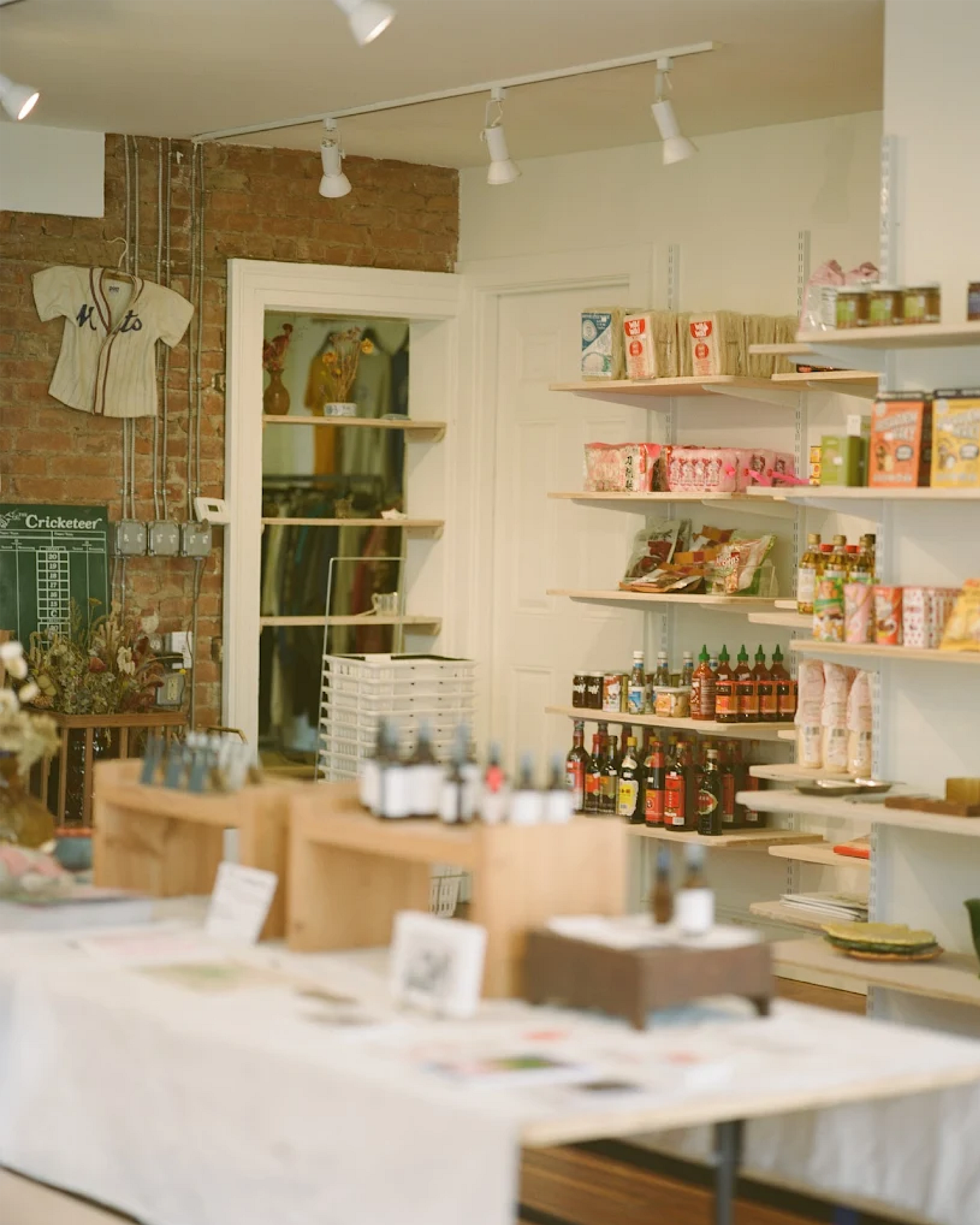
Cute shop! Photo: Enoki Catskill. On Sunday, May 2nd, save the date for a special Soy Sauce Sundae Social where we’ll be featuring Taiwanese soy sauce by Yu Ding Xing in ice cream sundaes. Look for soy sauce ice cream by Win Son Bakery, soy sauce caramel by me, and toppings (like seaweed almond crisps) from our shop. More details to come!
And finally, I wanted to share an upcoming project that’s very near and dear to my heart, benefitting local farmers and connecting our global food systems with our local ones.
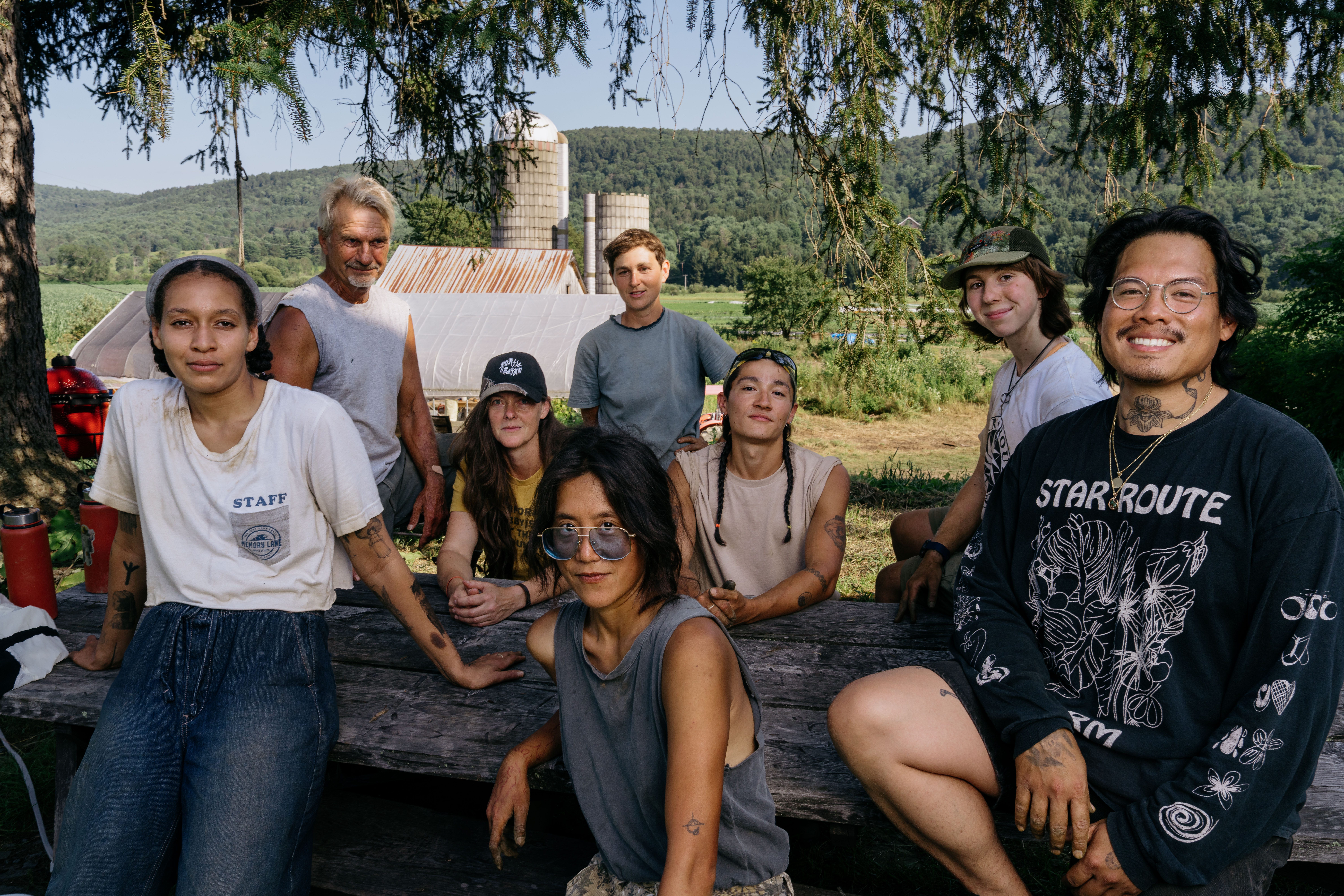
This year, I joined the board of the Catskills Agrarian Alliance, an agricultural nonprofit working with farmers in the Catskills to increase food access and build a healthier, more just food system. They do many things, from running a farm that supplies mutual aid organizations and a CSA, to creating a farmer-led logistics network that supports smallholder farms getting their goods to market. This growing season, our store will be a pick up point for their CSA.
After years of engagement with small farmers in Taiwan, it makes me so happy to connect with and contribute to our local food system meaningfully. Food is local, grown in the place where we live, but also migratory, moving as people do. I’m grateful to the CAA for their contribution to the furtherance of agriculture in the Catskills region, and am happy for the opportunity to serve them.
Keep an eye out for an invitation to a Taiwan Farm Dinner on May 11th, to benefit the Catskills Agrarian Alliance and Star Route Farm, presented in collaboration with Dana Cowin of Progressive Hedonist and hosted by Win Son. We’re not quite ready to announce yet, but here’s a preview of what’s to come, for our dear readers:
Progressive Hedonist and Yun Hai come together to celebrate the intersection of Taiwanese culinary tradition and locally grown produce — exploring how we eat, near and far, and what that reveals about climate change awareness and agency.
The night will benefit the Catskills Agrarian Alliance (CAA), an agricultural nonprofit working with local farmers across upstate New York to increase food access and build a healthier, more just food system.Chef Trigg Brown of Win Son will cook with spring produce sourced from Star Route Farm, located in the western Catskills and affiliated with CAA, alongside preserves, grains, and ferments from Taiwanese farmer-artisans, provided by Yun Hai. Together, these ingredients become a lens into how food moves around the world — and what local, global, and migratory food systems have to do with the climate crisis.
The evening will be punctuated by a roundtable discussion moderated by Dana Cowin of Progressive Hedonist, an event series committed to building resilience while sharing climate friendly practices through food and joy. Joining us for that will be Amanda Wong, head farmer at Star Route Farm, and Kimberly Chou, co-founder of Taiwan Food and Farm Delegation.
Stay tuned for more, and, as always, thank you for reading.
Crack! The four obliques of a perspective!
Lisa Cheng Smith 鄭衍莉
Written with editorial support by Amalissa Uytingco, Jasmine Huang, Lillian Lin, and Natya Regensburger. If you enjoyed this newsletter, please share it with friends and subscribe if you haven’t already. I email once a month, sometimes more, sometimes less. For more Taiwanese food, head to yunhai.shop, follow us on instagram and twitter, or view the newsletter archives.
紅椅頭: Little Red Stool

This is Yun Hai Taiwan Stories, a newsletter about Taiwanese food and culture by Lisa Cheng Smith 鄭衍莉, founder of Yun Hai. If you aren’t yet a subscriber, sign up here.
普通美: A Taiwanese Mailbox

This is Yun Hai Taiwan Stories, a newsletter about Taiwanese food and culture by Lisa Cheng Smith 鄭衍莉, founder of Yun Hai. If you aren’t yet a subscriber, sign up here.
Delightful piece, my favorite detail is the stacked stools as a kind of urban semaphore — not just seating but a promise, a placeholder, a message to the street that this spot is alive even when it's empty. Taiwan does this with so many small objects and gestures. The street communicates in a language you learn without anyone teaching it to you.
The idea of stools as urban semaphore stopped me. A promise to the street that this spot is alive even when it's empty. I grew up in Taiwan and spent decades in the US not realizing how much of that sidewalk language I had absorbed and carried without knowing. Your writing is making me see it again. Thank you :)