
This is Yun Hai Taiwan Stories, a newsletter about Taiwanese food and culture by Lisa Cheng Smith 鄭衍莉, founder of Yun Hai. If you aren’t yet a subscriber, sign up here.
This week, I’m thrilled to share Season Three of Cooking with Steam, our self-produced Taiwanese cooking show on YouTube. This season focuses on cooking for holidays. Come along with me as I spotlight traditional Taiwanese festival foods, and share a few suggestions to make American holidays a little more Taiwanese.
Also, this is the last week to take advantage of our first-time online customer promotion! If you’ve never shopped online with us, use the code HUANYING88 for a lucky $8.88 off your order of $50 or more.
Happy Ghost Month! *screams*
In the 7th lunar month, the gates of the underworld become permeable, allowing the spirits to roam free in the land of the living. Or so it’s believed by many in Taiwan. These 好兄弟 (aka good brothers) are not just roaming. They have appetites: the desire to eat, to drink, to occupy your body. You know, all your typical creature comforts.
This is happening now, by the way, August 13 to September 10. Hold on to your butts, don’t go in the water, don’t whistle at night, and for goodness sakes do NOT pick up any loose items you see on the ground, especially red envelopes or money, lest you end up married to a dead person.
But, try not to worry. Unlike the western conception of haunting, which really offers nothing in the way of practical remedies (exorcism not being practical), Taiwan’s Ghost Month tradition offers a simple protective measure: feed the ghosts. There’s nothing some good food and a cold beer can’t smooth over.
Ghost Month may be the closest thing Taiwan has to Halloween, but it’s entirely different. For many (including me, all jokes aside) this is a serious festival rooted in Buddhism, Taoism, and ancestor worship. The offerings are made out of compassion and respect. Read about it here.
In this season’s premiere, on the occasion of the Hungry Ghost Festival (tomorrow, August 27th), I share a bit more about this festival, the ghost-appeasing offerings known as pu du 普渡, and two traditional foods you can make to feed the ghosts (and yes, yourself, too).
COOKING WITH STEAM Season 03 Episode 01
Hungry Ghost Festival
好蒸氣 第三季 01 | 中元節
Pudu 普渡, or Hungry Ghost Offering
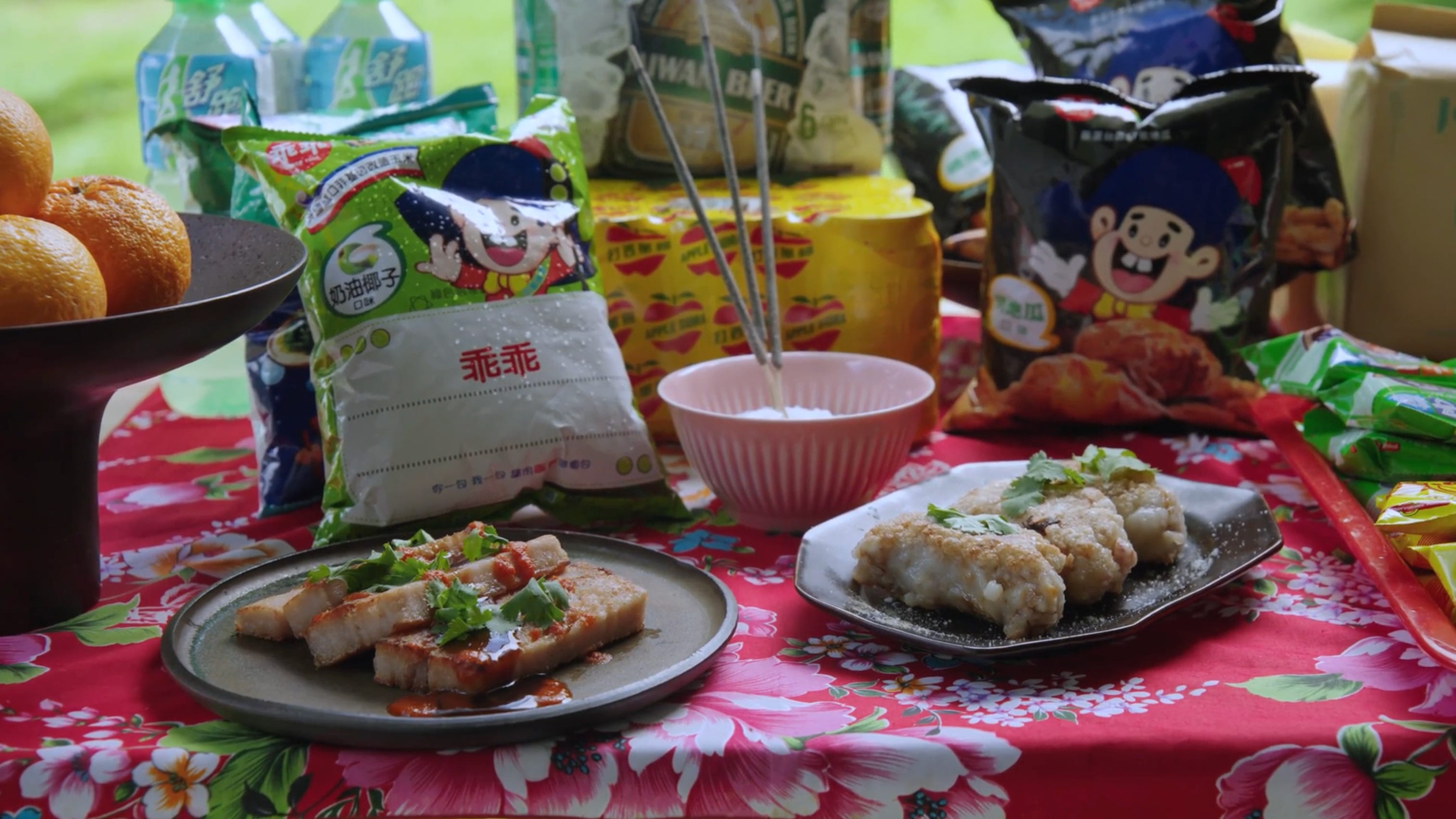
You will see ghost “buffets” around Taiwan throughout the 7th lunar month, especially on the 15th day of the month during the Hugnry Ghost Festival. These are piled high with offerings for the spirits, always placed outside, so as to not inadvertently invite the spirits into your home or place of work. They remind me a little bit of my parents’ garage after a trip to Costco: loaded with bulk snacks, ready to feed the ghosts and all their school friends, too.
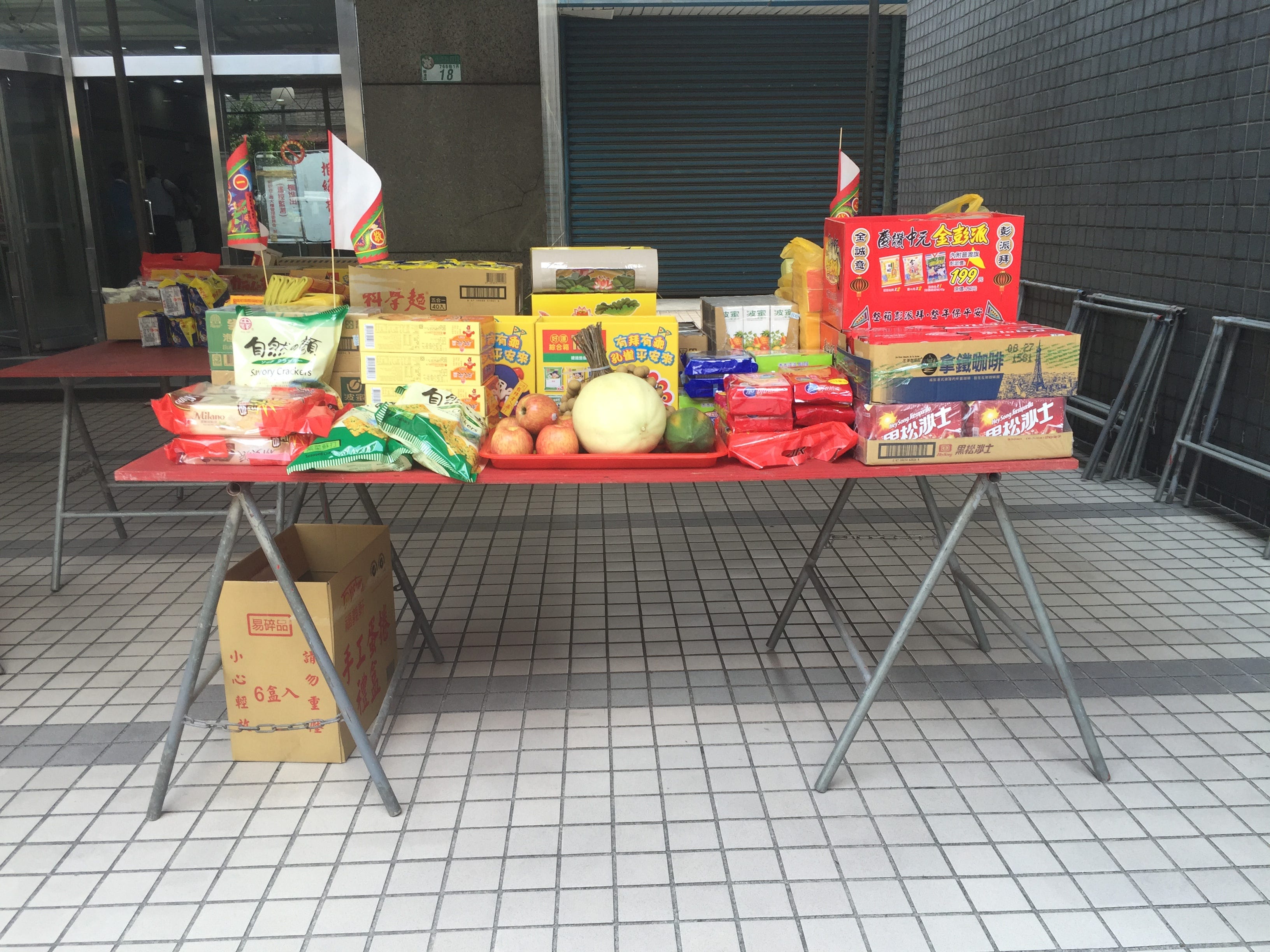
Though beer, Kuai Kuai, and packaged snacks are common, more traditional offerings on the table feature taro. Ghost Festival coincides with taro season, and the word for taro, 芋, sounds a bit like the word protect or 護 hu. Apropos.
Taro cakes (and radish cakes) are one of my favorite snacks, and I learned to make them from Siang Kháu Lū (雙口呂), a cultural kitchen in Taoyuan, Taiwan run by our friends Chou Pei-Yi and Huang Teng-Wei. They are dedicated to preserving traditional rice-based Taiwanese cuisine, and source the Taiwanese rice we carry in the shop.
(If you’d like to learn more from Teng-Wei and Pei-Yi, please check out their online cooking class. It’s all in Chinese, but you can follow these steps to translate it into English. Highly recommend!)
Recipe: Taro Cakes, Two Ways
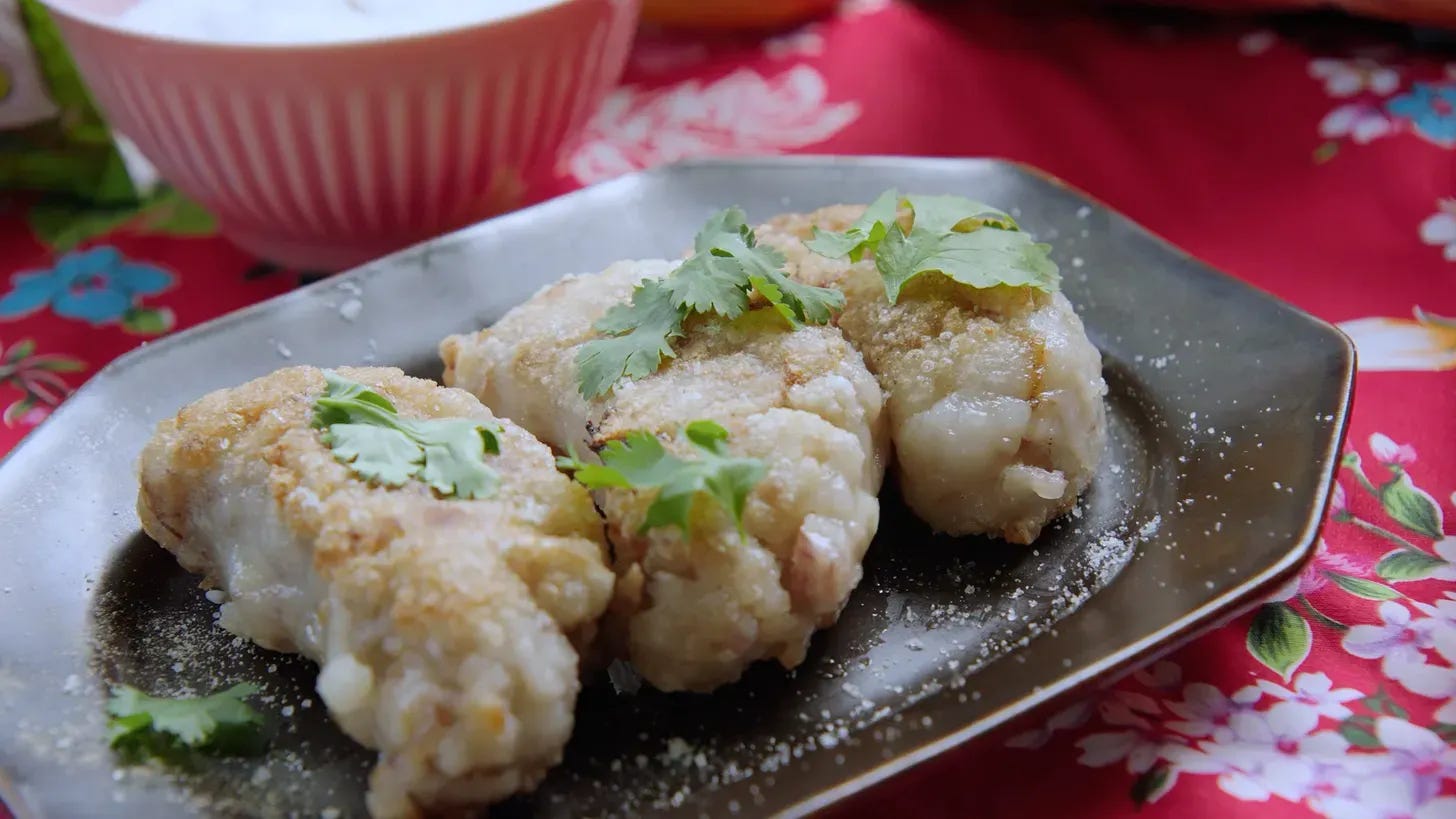
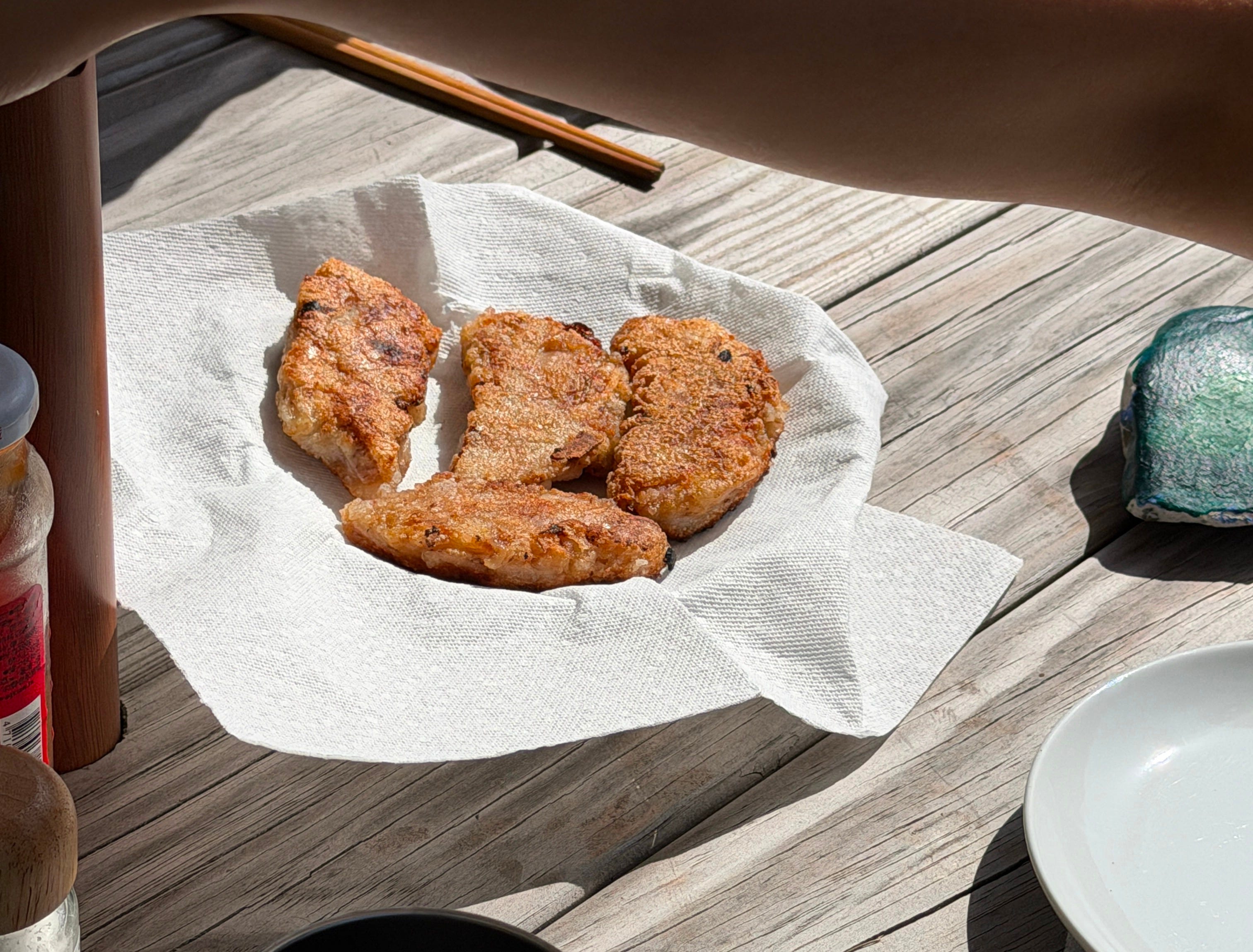
In today’s episode, we’re making two traditional taro cakes. First up: 芋粿巧 ōo-kué-khiáu. These old school Taiwanese snacks are made from short grain penglai rice, glutinous rice, and taro. They’re pressed into a crescent shape, which mirrors the shape of divination blocks used during bai bai 拜拜, or the worship of gods and spirits. They’re savory and chewy and rich, and I love them sprinkled with Taiwanese pepper salt.
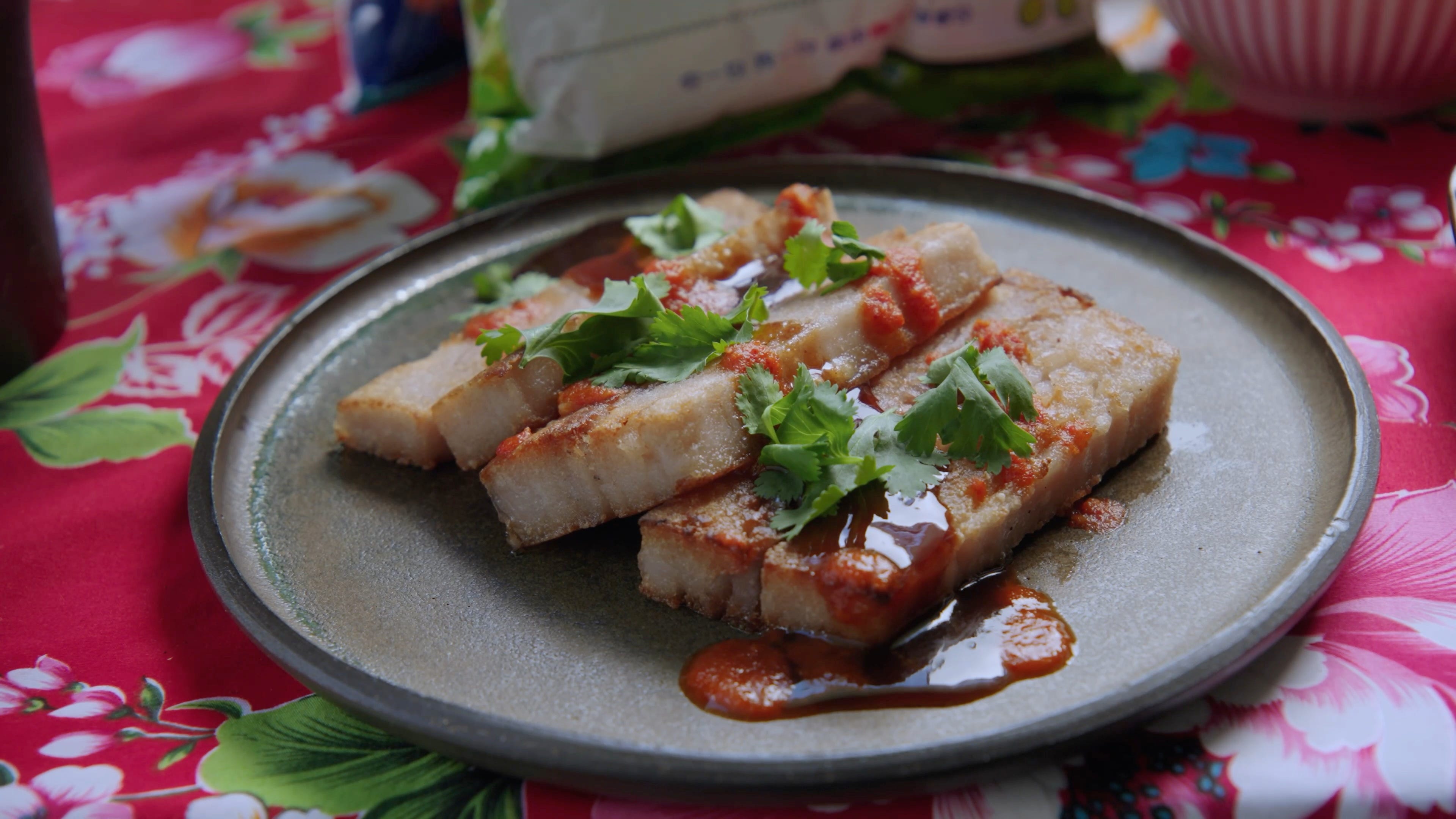
The second is the more common version of this snack, known simply as 芋頭糕 taro cakes. These are similar to radish cakes you might find at dim sum, but made from taro root instead. To make them, I blend whole long grain zailai rice kernels with taro root to make a batter. I also keep some of the taro in matchstick shape, to introduce more texture.
Ingredients and Equipment
Here’s a guide to the ingredients, equipment, props, and accessories featured on the show.
Ingredients
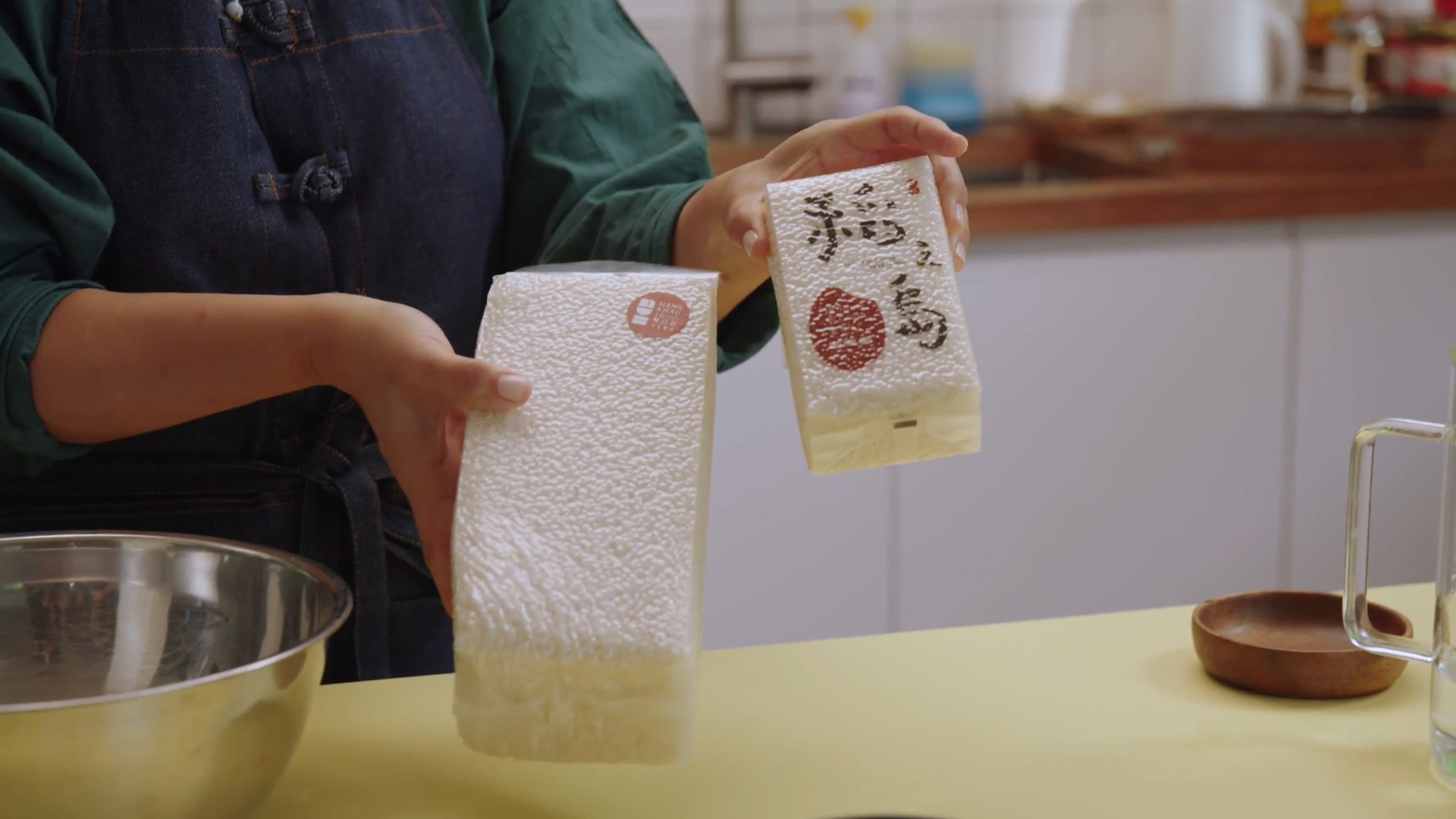
Siang kháu Lū penglai short grain rice
out of stock until early Sept
bulk size coming soon
Siang Kháu Lū zailai long grain rice
Dong He shallot oil
Dong He peanut oil
Zhou Nan frost salt
Yu Ding Xing Firewood Soy Paste, for garnish
Nyonya Sauce, for garnish
Prep Work and Kitchen Gear
A 15-year-old round ironwood cutting board from an Asian grocery store in Detroit
My trusty old wok from a since-closed shop in Chicago
Vitamix blender
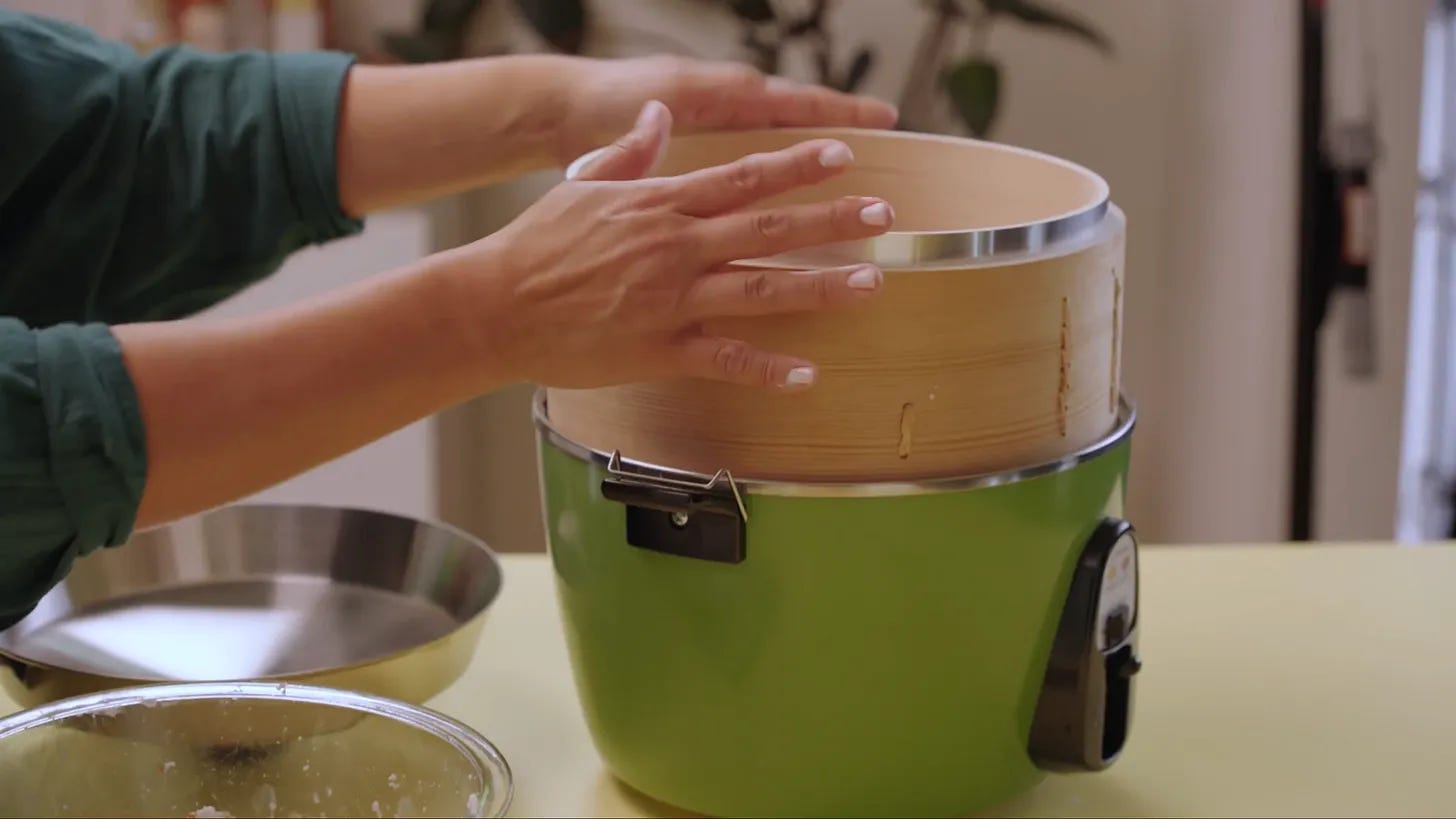
Green 11-Cup Tatung Electric Steamer and a bamboo and cypress steamer
Disposable steamer paper
Normally, I’d use the cotton steamer cloths we carry, but disposable paper is slightly easier for this dish because the taro can get sticky.
Plating and Decor
The pink incense bowl on our altar is a preview of a forthcoming product launch: ceramics modeled after the iconic plastic pink dinnerware commonly used during bando 辦桌, or roadside banquets in Taiwan. Sign up for our waitlist here to be notified when they drop.
Accessories and Clothing
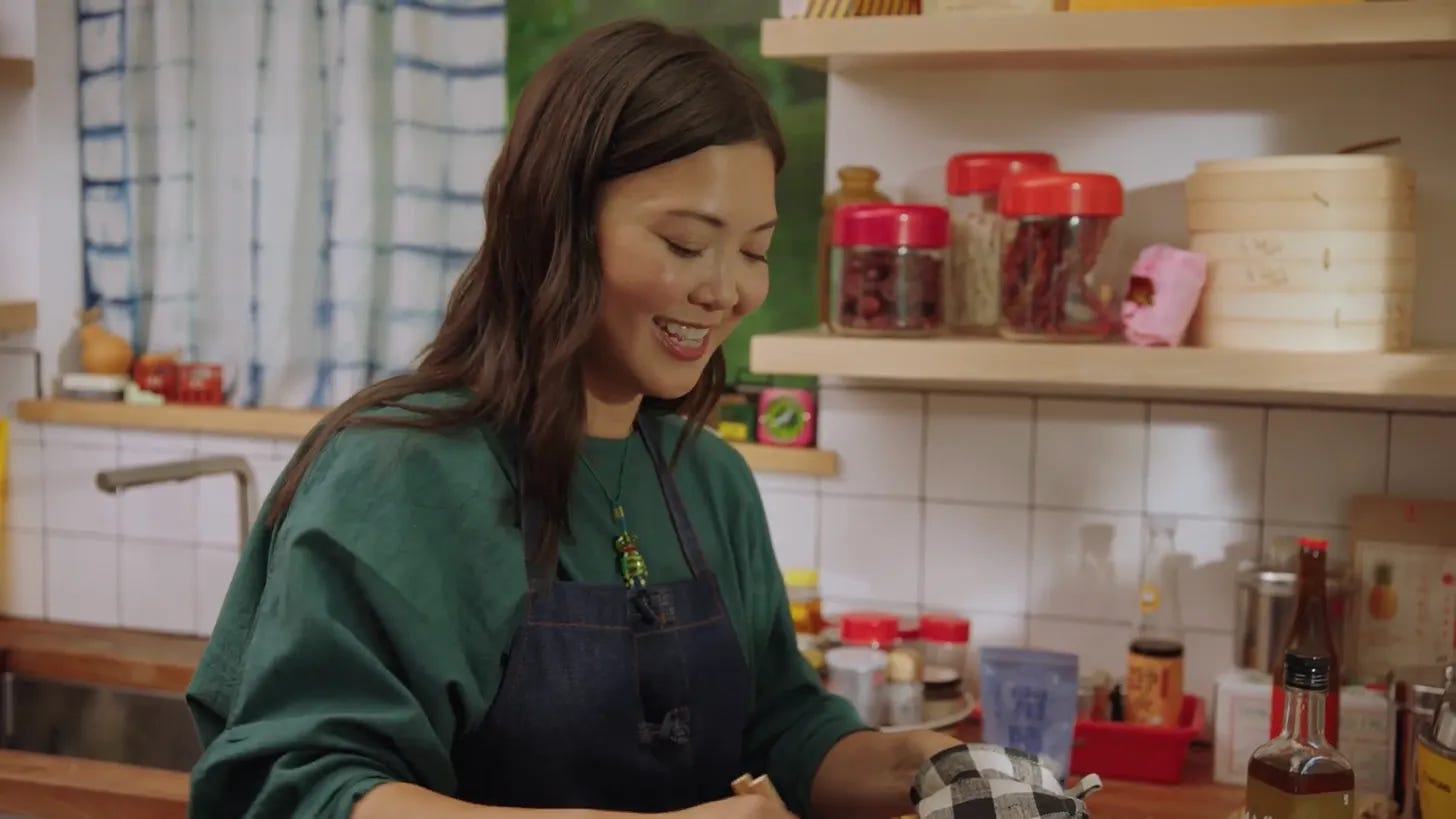
Taiwanese Huichung linen shirt and pants from The Wax Apple
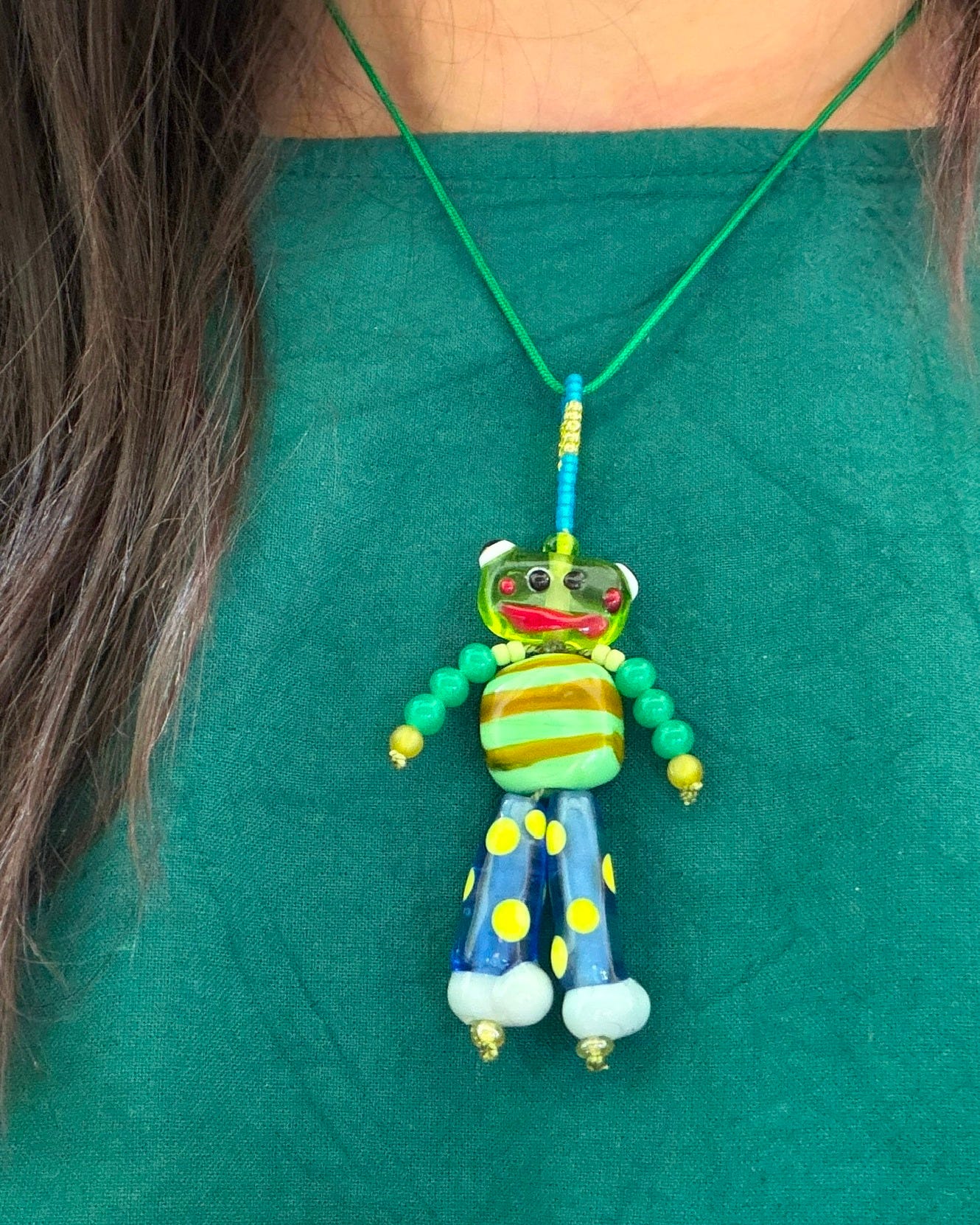
Exquisite corpse frog necklace from Pear Ware
Apron from Chifa LA
Earrings by Sophie Buhai
Gratitude and Acknowledgements
We couldn’t have done this without the support and passion of our friends and community. So much love and gratitude to Night Shift, who produced this, and all our creative collaborators for giving the show its unique voice.
Credits
Produced by Night Shift and Yun Hai
Made possible by Tatung Taiwan and Sleepy Tofu
Team:
Lisa Cheng Smith, host
Rich Ho, guest talent
Trigg Brown, guest talent
Jessie YuChen, food stylist
Nicole Wang, culinary assistant
Amalissa Uytingco, culinary producer
Cat Yeh, BTS producer
Sam Broscoe, producer
Alec Sutherland, director & editor
Nathan Bailey, director of photography
Rob Woods, camera operator
Taylor Dekker, camera operator
Alexandra Egan, art director
Meena Kim, production assistant
Hikari Tezuka, hair and makeup
Mark Tumas, editor
Mark Maloney, editor
Kyle Garvey, sound mixer
R. Hollis Smith, mix
Dustin Wong, music
O.OO, graphics
Jil Tai & Ben Hill, motion design and title sequence
Leo Chang, language advisor
Rachel Watson, BTS photography
Our Set
Our set features props from Taiwanese, Taiwanese-American, and international friends worldwide, creating those Taiwancore vibes we love so much at Yun Hai.
Thank you for the beauty Natoora, Hai-Hsin Huang, Mikey Chen, Lillian Li, Emilie Liu, Debbie Carlos, Matthew So, Kelli Cain, Material Kitchen, Mogutable, Felicia Liang, Sam Tilney, Lulu Yao Gioiello, Eric Sze, Julianne Ahn, and Leh Lin.
And much gratitude to our friends who contributed to wardrobe: Judi Rosen, Pear Ware, Rest Objects, a/c space, and The Wax Apple.
Special Thanks
Hollow, Building Block, Chou Pei-Yi, Huang Teng-Wei, Hai-Hsin Huang, Maggie Chang, Shirley Liu, Samantha Tilney, Ivan Wu and Feng Hsieh, Jess Wang, Lillian Lin, Jasmine Huang, Natya Regensburger, Jeremy Hersh, & the entire Yun Hai Team, our partners, and our wonderful community.
Before I Go…
To celebrate the launch of the third season of Cooking With Steam, I’m making a very limited amount of taro rice cakes (frozen) to pick up in our Brooklyn storefront! Look out for an announcement for preorder on our Instagram next week.
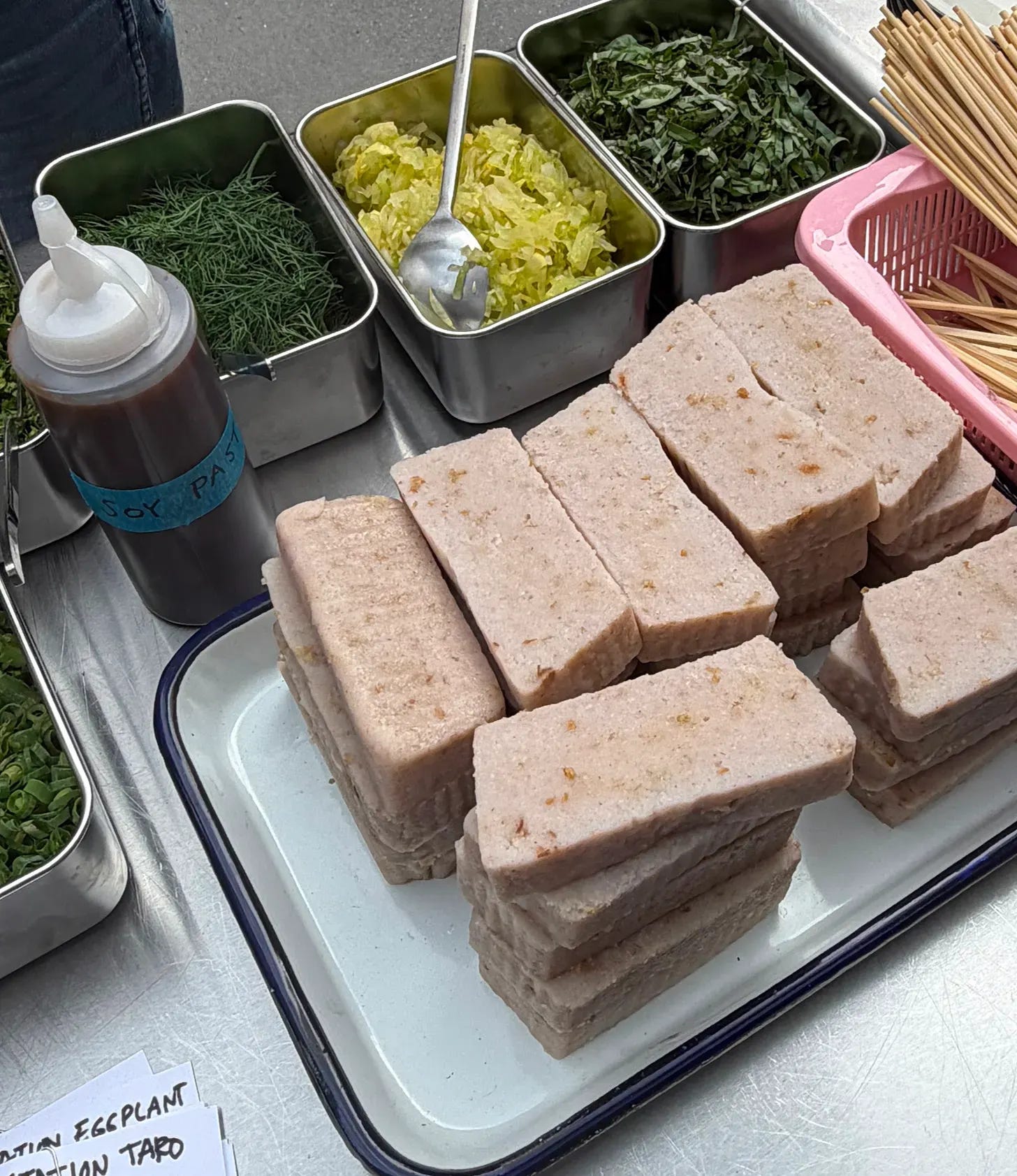
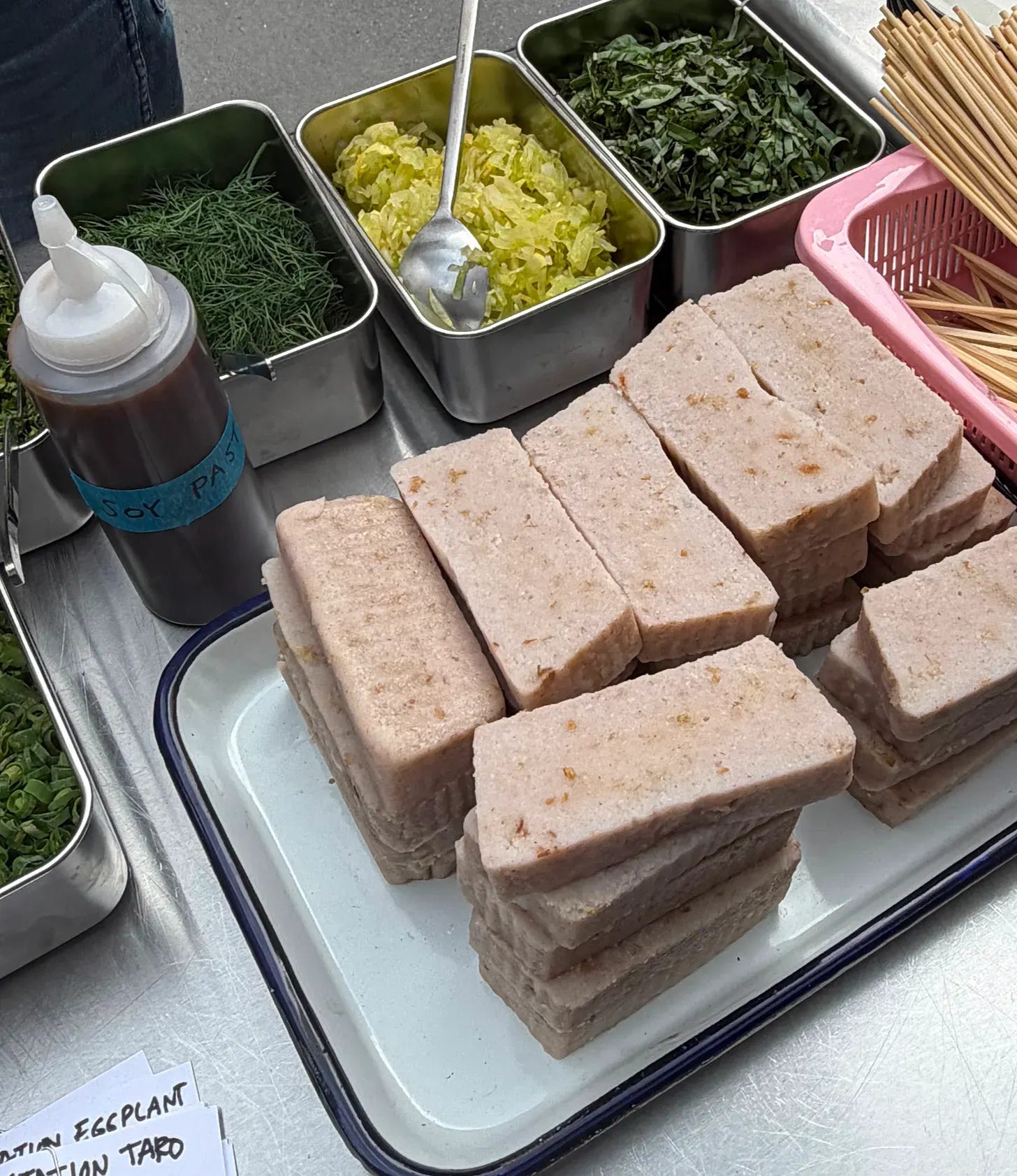
A big batch of taro cakes at my Grill Time pop up at Hudson Wilder last weekend. Super good on the coals, by the way.
Finally, I’ll be helping out at the annual Star Route Farm Dinner this weekend on Saturday, August 29th. Chef Patty Lee and Wine Director Matt Turner of Lei will prepare a celebratory dinner using fresh produce from Star Route Farm and other ingredients from partner farms working with The 607 CSA. It’s sold out, but just thought you might be interested!
Q: What is a ghost’s favorite snack?
A: Taro-r
bai bai 拜拜,
Lisa Cheng Smith 鄭衍莉
Written with editorial support by Amalissa Uytingco, Jasmine Huang, and Lillian Lin. If you enjoyed this newsletter, please share it with friends and subscribe if you haven’t already. I email once a month, sometimes more, sometimes less. For more Taiwanese food, head to yunhai.shop, follow us on instagram and twitter, or view the newsletter archives.